Showing posts with label Derrick Davis. Show all posts

Monday, October 7, 2013

Prince George’s Zoning Committee Doubles Down on Sprawl Bills


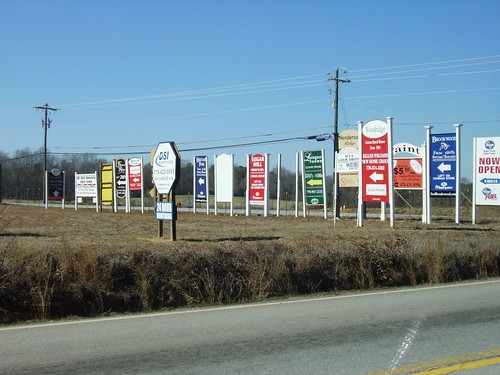
Photo by FadderUri on Flickr

Instead of taking the opportunity to significantly reduce the pipeline of residential sprawl development by simply taking no action and letting dormant projects expire, a council committee voted to move forward on bills that would extend the validity periods for those projects for another two years.

As discussed in last week’s post, 80% of the approved residential development in the Prince George’s County pipeline consists of low-density single-family homes located outside of the Beltway and away from mass transit.

County planners warn that this is the wrong type of development, in the wrong place, and that it puts the county “at a continued disadvantage relative to its neighbors.” They urged lawmakers to recalibrate county development priorities to focus on compact, mixed-use development near transit. Sadly, county council members weren’t listening.

Davis’s Bills: 2-Year Extension, Backed by Developer Interests

Photo by Prince George's County
As originally drafted, CB-70 and CB-71 would have granted only a one-year extension, which would have effectively grandfathered some projects approved as far back as January 2003 until December 31, 2014. But in a curious and brazen move, the bills’ sponsor, District 6 council member Derrick Leon Davis, moved to amend the bills to grant a two-year extension to those projects, until December 31, 2015.

Davis’s amendment was likely prompted by the parade of developers’ representatives who showed up to last week’s Planning, Zoning and Economic Development (PZED) committee meeting to testify in favor of the bills. According to the committee minutes, seven developer attorneys testified: Thomas Haller, Larry Taub, Norman Rivera, Ed Gibbs, AndrĂ© Gingles, Mike Nagy, and Chris Hatcher. Additionally, two lobbyists from the Maryland-National Capital Building Industry Association testified: Marcus Jackson and Kenneth Dunn.

One of the developer attorneys, AndrĂ© Gingles, raised eyebrows this past December by suggesting that council member Eric Olson, who was in line to become the next council chair, was “too Arlington” for Prince George’s County. And one of the lobbyists, Marcus Jackson, was a longtime legislative liaison for disgraced former county executive Jack Johnson, as well as a former policy analyst to District 8 council member Obie Patterson.

The Coalition for Smarter Growth and I submitted written comments in opposition to the bills; however, our voices were clearly drowned out by the din of developer representatives who supported the extensions.

Ultimately, 4 of the 5 PZED committee members voted in favor of Davis’s amended bills: PZED chair Mel Franklin (District 9), PZED vice chair Karen Toles (District 7), council chair Andrea Harrison (District 5), and council vice chair Obie Patterson (District 8).

The committee’s lone dissenting vote was from council member Eric Olson (District 3), who expressed concern that the legislation did not provide any incentive for developers to move forward with their projects.

Olson’s Alternative Bill: 6-Month Extension If Permits Immediately Obtained

Photo by Prince George's County
Olson has drafted an alternative validity extension bill, CB-75, which would grant an extension of not more than 6 months to any dormant project that applies for and obtains required grading or building permits prior to the expiration of the existing validity period. The 6-month period would run from the date the building or grading permit is issued. The PZED Committee voted unanimously to forward this bill to the full council.

As currently drafted, Olson's bill does not have a sunset provision. Instead, it sets up a new procedure where developers could obtain an automatic 6-month extension of site plan validity periods for any project that is able to obtain a building or grading period prior to the expiration of its then-current validity period. Olson believes this new procedure will properly incentivize serious developers to keep their projects on schedule.

How to Make Public Comments

CB-70, the Davis bill extending the validity period for site plans until December 31, 2015, is scheduled to be formally introduced during the council’s October 8 legislative session. It’s unclear when Davis’s companion bill relating to subdivisions, CB-71, or Olson’s 6-month extension bill for site plans, CB-75, will be introduced, as these do not (yet) appear on the agenda. CB-71 and CB-75 are to be introduced on October 15.

Photo by Sarah Voisin, WashingtonPost
According to the council’s standard legislative process, once a bill is introduced, a public hearing before the full council is scheduled to occur “not earlier than 14 days after introduction.” Therefore, there is still time to let the council know what you think about these bills.

You should direct any written comments to the Clerk of the Council, and copy the individual council members, whose email addresses you may find in the Maryland Manual. You may also make limited oral public comments at the hearing, which will occur Tuesday, November 19, 2013, at 10:00 am.


CORRECTION: After receiving additional clarifying information from Councilmember Olson, this article was updated to reflect that the lack of a sunset provision in CB-75 was intentional and not a possible drafting error, as previously suggested by the author. The article was also updated to include the scheduled public hearing date and time.

Tuesday, September 24, 2013

Westphalia: A Bad Deal for Prince George's County

Westphalia Groundbreaking. Photo by Walton Group.

Even the developers of the proposed Westphalia town center project in Prince George's County realize that it's a fool's errand to build a sprawling edge city on a rural greenfield that's disconnected from transit. But will county leaders figure it out?

William Doherty, CEO of Canadian firm Walton International Group, recently spoke to local business leaders about the proposed 480-acre development in southern Prince George's, which will have 4.5 million square feet of office, 1.4 million square feet of retail, 600 hotel rooms, and 5,000 homes. Walton wants to lure the new FBI headquarters as well.

Doherty acknowledged that Westphalia's location was a problem. "There will be 15,000 jobs at Westphalia…and there is no [transit] service," he said. He wants the county or state to build a $75 million bus rapid transit line to the Branch Avenue Metro station and a $150 million new interchange at Pennsylvania Avenue and Suitland Parkway. Doherty said Walton is even "willing to" pay a portion of the cost.

County and state officials have shown no willingness to back away from this ill-advised project. In fact, they're planning to help the developers out by building expensive new infrastructure at public expense, even as the county's 15 Metro stations languish from underdevelopment.

Westphalia was born of bad policy and corrupt politics

Former county executive Jack Johnson and former council chair Jim Estepp first conceived Westphalia with former District 6 county councilman Samuel Dean and two developers, Patrick Ricker and Daniel Colton. In 2007, they worked to secure the approval of an elaborate master plan that upzoned this rural area into a major regional mixed-use center.

Five years earlier, the county had adopted its 2002 Approved General Plan, which stressed transit-oriented development around Metro stations and revitalization of existing communities inside the Beltway. The 2005 Countywide Green Infrastructure Master Plan identifies most of Westphalia as an area of countywide environmental significance, given its vast forest lands.

Although the 2002 General Plan had identified Westphalia as a "possible future" community center, it in no way suggested that the area should be prioritized for development ahead of the county's existing Metro stations and its existing inner-Beltway communities. Indeed, developing at Westphalia at that juncture seemed to be contrary to all of the county's stated development goals and priorities. Nevertheless, the 2007 Westphalia Sector plan sailed through the Planning Board and the County Council.

Then came the Great Recession, which pretty much stalled all significant development projects across the region, good and bad. And if that wasn't enough, toward the end of 2010, the FBI arrested county executive Jack Johnson and his wife, Leslie, bringing to light the long-running federal corruption and bribery investigation of the Johnson administration, arising out of a series of development-related schemes. The Johnsons, Patrick Ricker, and many others pled guilty and went to prison, while Colton still awaits sentencing.

Walton swooped in to resurrect a failed idea on the cheap

The Great Recession and the corruption scandal had left the Westphalia project all but dead on the vine. Ricker and Colton had defaulted on their loan, and Wells Fargo had foreclosed on the property. This would have been a perfect time for the county to reevaluate the Westphalia plan and the suburban sprawl strategy that undergirded it.

Unfortunately, a bad idea doesn't die that easily. Shortly after Rushern Baker's election as county executive in 2010, his administration signaled that Westphalia would continue to receive significant county backing. In June 2011, Baker's spokesperson Scott Peterson said, "the [Westphalia] development is important to the residents of the community and the county, and we'll be working hard to keep the project on line."

In February 2012, Walton purchased the property from Wells Fargo for $29.5 million, with the full blessing of the Baker administration. Aubrey Thagard, assistant deputy chief administrative officer for economic development, stated that the administration was "encouraged by [Walton's] approach in terms of the quality of development that would come to Prince George's County."

Walton has already secured a $150 million commitment from Governor Martin O'Malley to build the Pennsylvania Avenue/Suitland Parkway interchange. While the county leadership supports Greenbelt over Westphalia for the FBI headquarters, it still enthusiastically supports the creation of a new edge city that District 6 councilmember Derrick Leon Davis hopes will one day rival the county's largest city, Bowie.

Councilman Derrick Leon Davis at Westphalia groundbreaking. Image from YouTube.

The county's support of Westphalia will continue to stifle real TOD

At a groundbreaking ceremony in June, Councilmember Davis sated that Westphalia represented a "new era in Prince George's County." But it's really just a continuation of the same "business as usual" approach that has resulted in the county having 15 of the least developed Metro station areas in Greater Washington and virtually no transit-oriented walkable urban places.

It's also the reason that the county now has more than 2,000 miles (and more than 5,000 lane-miles) of roadways that it is responsible for maintaining. Many of these existing roads lack sufficient lighting, sidewalks, and pedestrian signaling, even around Metro stations, which often leads to deadly results.

Westphalia will require scores of miles of additional roads that the county will have to maintain. And a project as large as Westphalia would siphon away most of the development opportunities around nearby Metro stations, like Largo Town Center and Branch Avenue, for decades to come.

Westphalia's proximity to 6 Metro stations. Click for interactive Google map.
Westphalia is also fairly close to the former Landover Mall site, which has been shuttered for more than a decade and is now in need of new investment. While the Landover Mall site is also not Metro accessible, it is at least inside the Beltway, already has the roadways and other infrastructure to support dense mixed-use development, and doesn't require developing farmland.

Councilman Davis suggests that it's possible for Prince George's County to "walk and chew bubble gum" at the same time: that is, to support suburban edge city projects like Westphalia while simultaneously supporting TOD at places like Largo Town Center, both of which are in his district. But the hard truth is that the county cannot successfully pursue sprawl development and transit-oriented development at the same time.

County planners note that growth in the wrong places causes the county to "miss significant opportunities to better utilize our transit infrastructure and capture forecasted regional demand for new housing and jobs." Furthermore, sprawling development patterns put the county in an economic bind by causing it to expend crucial resources "to expand, duplicate, and maintain new infrastructure, in addition to maintaining the existing infrastructure in mature communities."

I suggested in my recent policy paper that the county should rezone Westphalia to a rural or very low density zone and focus its attention on bringing true high-quality transit-oriented development to its Metro stations, in keeping with its stated development priorities. It will take an incredible amount of political courage and will for county leaders to do so, given their previous full-throated support of this project.

Likely the only way they would even consider doing it is if there were a significant response from the community for a new direction. Knowing my fellow citizens, that's a very tall order indeed.


(A version of this article appeared on Greater Greater Washington on September 23, 2013.)