Showing posts with label Eric Olson. Show all posts

Monday, October 7, 2013

Prince George’s Zoning Committee Doubles Down on Sprawl Bills


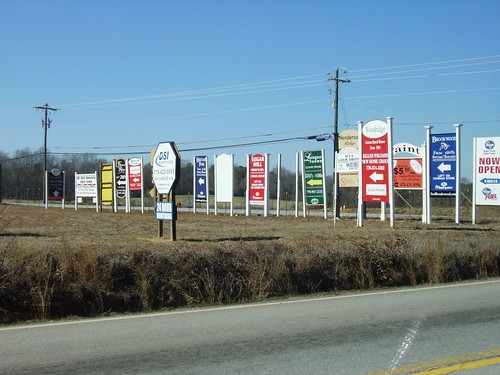
Photo by FadderUri on Flickr

Instead of taking the opportunity to significantly reduce the pipeline of residential sprawl development by simply taking no action and letting dormant projects expire, a council committee voted to move forward on bills that would extend the validity periods for those projects for another two years.

As discussed in last week’s post, 80% of the approved residential development in the Prince George’s County pipeline consists of low-density single-family homes located outside of the Beltway and away from mass transit.

County planners warn that this is the wrong type of development, in the wrong place, and that it puts the county “at a continued disadvantage relative to its neighbors.” They urged lawmakers to recalibrate county development priorities to focus on compact, mixed-use development near transit. Sadly, county council members weren’t listening.

Davis’s Bills: 2-Year Extension, Backed by Developer Interests

Photo by Prince George's County
As originally drafted, CB-70 and CB-71 would have granted only a one-year extension, which would have effectively grandfathered some projects approved as far back as January 2003 until December 31, 2014. But in a curious and brazen move, the bills’ sponsor, District 6 council member Derrick Leon Davis, moved to amend the bills to grant a two-year extension to those projects, until December 31, 2015.

Davis’s amendment was likely prompted by the parade of developers’ representatives who showed up to last week’s Planning, Zoning and Economic Development (PZED) committee meeting to testify in favor of the bills. According to the committee minutes, seven developer attorneys testified: Thomas Haller, Larry Taub, Norman Rivera, Ed Gibbs, André Gingles, Mike Nagy, and Chris Hatcher. Additionally, two lobbyists from the Maryland-National Capital Building Industry Association testified: Marcus Jackson and Kenneth Dunn.

One of the developer attorneys, André Gingles, raised eyebrows this past December by suggesting that council member Eric Olson, who was in line to become the next council chair, was “too Arlington” for Prince George’s County. And one of the lobbyists, Marcus Jackson, was a longtime legislative liaison for disgraced former county executive Jack Johnson, as well as a former policy analyst to District 8 council member Obie Patterson.

The Coalition for Smarter Growth and I submitted written comments in opposition to the bills; however, our voices were clearly drowned out by the din of developer representatives who supported the extensions.

Ultimately, 4 of the 5 PZED committee members voted in favor of Davis’s amended bills: PZED chair Mel Franklin (District 9), PZED vice chair Karen Toles (District 7), council chair Andrea Harrison (District 5), and council vice chair Obie Patterson (District 8).

The committee’s lone dissenting vote was from council member Eric Olson (District 3), who expressed concern that the legislation did not provide any incentive for developers to move forward with their projects.

Olson’s Alternative Bill: 6-Month Extension If Permits Immediately Obtained

Photo by Prince George's County
Olson has drafted an alternative validity extension bill, CB-75, which would grant an extension of not more than 6 months to any dormant project that applies for and obtains required grading or building permits prior to the expiration of the existing validity period. The 6-month period would run from the date the building or grading permit is issued. The PZED Committee voted unanimously to forward this bill to the full council.

As currently drafted, Olson's bill does not have a sunset provision. Instead, it sets up a new procedure where developers could obtain an automatic 6-month extension of site plan validity periods for any project that is able to obtain a building or grading period prior to the expiration of its then-current validity period. Olson believes this new procedure will properly incentivize serious developers to keep their projects on schedule.

How to Make Public Comments

CB-70, the Davis bill extending the validity period for site plans until December 31, 2015, is scheduled to be formally introduced during the council’s October 8 legislative session. It’s unclear when Davis’s companion bill relating to subdivisions, CB-71, or Olson’s 6-month extension bill for site plans, CB-75, will be introduced, as these do not (yet) appear on the agenda. CB-71 and CB-75 are to be introduced on October 15.

Photo by Sarah Voisin, WashingtonPost
According to the council’s standard legislative process, once a bill is introduced, a public hearing before the full council is scheduled to occur “not earlier than 14 days after introduction.” Therefore, there is still time to let the council know what you think about these bills.

You should direct any written comments to the Clerk of the Council, and copy the individual council members, whose email addresses you may find in the Maryland Manual. You may also make limited oral public comments at the hearing, which will occur Tuesday, November 19, 2013, at 10:00 am.


CORRECTION: After receiving additional clarifying information from Councilmember Olson, this article was updated to reflect that the lack of a sunset provision in CB-75 was intentional and not a possible drafting error, as previously suggested by the author. The article was also updated to include the scheduled public hearing date and time.

Monday, December 10, 2012

Is "Too Arlington" a Bad Thing in Prince George's?

This past Tuesday, the outgoing vice chair of the Prince George’s County Council, Eric Olson (D3-College Park), failed to receive the support of his colleagues to become council chair in 2013. One longtime developer lawyer in the county, André Gingles, posited that Olson didn’t get the job because he might be a bit “too Arlington” for Prince George’s. What’s that supposed to mean? Is that supposed to be some type of slur?

Olson, a well-known progressive smart growth and environmental advocate on the council, had been elected by his colleagues as vice chair for two years in a row. But in a surprise move, the council bypassed him for the top spot in 2013 and instead reelected its current chair, Andrea Harrison (D5-Springdale). The council also stripped Olson of the vice chairmanship and replaced him with council member Obie Patterson (D8-Fort Washington).

Harrison, who had previously pledged her support to Olson for the chairmanship, reversed course, agreed to allow her name to be placed back in the running, and then cast the deciding vote in favor of herself. As Harrison herself acknowledged to the Washington Post, the circumstances of her reelection to the chairmanship were “not comfortable.”

Through a spokesperson, county executive Rushern Baker eschewed any role in the thwarting Olson’s election to the council chair position. However, the Post reports that Baker did show up in the council chambers shortly before the vote was cast and declared, “We are moving in the right direction, we are taking Prince George’s County in the direction it needs to go .?.?. because of [Harrison’s] leadership and [her] work.”

So what is it about Harrison’s leadership and work style that arguably makes her not “too Arlington”? Or, perhaps better stated, what is it about Olson’s perceived leadership and work style that arguably makes him “too Arlington” for Prince George’s?

Well, we know that Harrison and new council vice chair Obie Patterson are both reliable supporters of the current county executive, Rushern Baker, and his largely suburban-oriented economic development agenda. Olson, by contrast, has opposed certain development projects supported by Baker, such as the controversial rezoning of the Cafritz property—a vacant, wooded formerly single-family residential-zoned parcel in Riverdale Park that is outside of the half-mile pedestrian zone of any existing Metro station or any planned MARC station.

Might Olson’s approach to land use and economic development issues be what’s “too Arlington” for his colleagues on the council and/or to County Executive Baker?

Prince George’s Should Learn From Arlington’s Smart Growth Focus

The 2002 EPA national award winner for overall excellence in smart growth, Arlington County, Virginia, is a proven leader in transit oriented development and environmental sustainability. Whether measured by housing units, jobs, retail and office space, economics, crime, or other general “livability” factors, Arlington stacks up quite favorably in the metropolitan Washington region.

Arlington’s economic development strategy over the past 40 years has been inexorably linked to its two Metro station corridors—the Orange Line’s Rosslyn-Ballston corridor and the Blue and Yellow Lines’ Pentagon/Crystal City corridor. Major employment centers and higher density residential and retail development were directed toward “urban villages” located around 7 of the county’s 10 stations: Rosslyn, Courthouse, Clarendon, Virginia Square, Ballston, Pentagon City, and Crystal City. (Arlington’s other three stations—Arlington Cemetery, Pentagon, and Reagan National Airport—have other dedicated uses.) Arlington also prioritized reinvestment in its existing residential communities ahead of creating new sprawl developments on previously undeveloped land.

Sadly, Prince George’s County has not followed Arlington’s path to success. The county has 15 Metro stations—the largest number of any jurisdiction outside of the District Columbia. With 2,500 acres of developable land within a half-mile of those stations, county planners acknowledge that Prince George’s “is uniquely situated in the Washington region to take advantage of the regional interest in TOD.”

Yet, while county leaders continue to pay lip service to the idea of transit-oriented development, they actively support development strategies that are directly contrary to that idea. Virtually all of Prince George’s County’s Metro stations remain undeveloped or underdeveloped. At the same time, county leaders continue to push outside-the-Beltway suburban sprawl strategies, like the town-less “town center” projects at Konterra, Westphalia, and Woodmore. And rather than reinvesting in its existing residential communities inside the Beltway, the county breaks its own rules to approve oversized greenfield projects like the Cafritz property.

Thus far, there has simply been no commitment on the part of Prince George’s officials to the smart growth and TOD concepts that have secured Arlington’s prosperity over the past few generations. And the comparative demographics show the troublesome results of that lack of commitment: Prince George’s lags behind Arlington in nearly every category.  

FBI Headquarters and Regional Hospital Planning Typify Prince George’s Haphazard Development Strategy

More recently, we’ve see other examples of the county’s unfocused approach to TOD in the ongoing discussions as to where the new FBI headquarters and regional medical center campuses will be located. I argued nearly a year ago that the county needed to be more nimble if it wanted to land the FBI. After identifying the five available Metro station sites (i.e., Branch Avenue, Largo Town Center, Morgan Boulevard, New Carrollton, and Greenbelt) that would meet the federal government’s requirements for the new building, I recommended Morgan Boulevard as the most ideal site. Indeed, the Morgan Boulevard station area could accommodate both the new regional medical hospital and the FBI headquarters.

The county still has yet to publicize or lobby for a particular site preference for the FBI building or the new hospital. However, despite the many transit-oriented development opportunities existing around Metro stations, the current buzz appears to favor the nearly-abandoned Landover Mall site for one or both projects. Like the Cafritz property, the mall site is outside of the pedestrian zone of any Metro station and will therefore likely encourage more single-occupancy automobile travel.

Arlington County would never have considered a development strategy that placed some of its largest employment centers and highest quality jobs away from Metro. Why? Because Arlington recognizes that successful planning requires strategic leveraging of Metro’s premier regional rail transit system. As David Alpert recently argued, when deciding where to locate a major job-and customer/patient- generating public facility such as a regional medical center, the list should start and stop with Metro.  

Prince George’s Shouldn’t Fear Being “Too Arlington”

If Eric Olson was passed over for chair of the Prince George’s County Council because of a fear that he would be “too Arlington,” that is truly regrettable. Most in the region would readily agree that, as compared to Prince George’s, Arlington County government is better managed and run, less corrupt, more focused on smart growth and transit-oriented development, better at managing the public’s finances, and overall more successful in providing a high quality of life to its citizens.

The truth is that the Prince George’s County’s government could stand to become “more Arlington” in its outlook and in its approach to smart growth and transit-oriented development. Because—let’s face it—“keeping it [real] Prince George’s” hasn’t exactly gotten us where we need to be.


(A version of this article originally appeared on Greater Greater Washington on December 10, 2012.)