Showing posts with label Smart Growth. Show all posts

Friday, October 6, 2017

When Will Prince George’s Pull the Plug on Dead Development Projects?

If a development project was approved for construction prior to the Great Recession, but it still hasn’t been able to get off of the ground yet, isn’t it time to acknowledge that the project is just…dead? Well, yes, obviously! So why does the Prince George’s County Council have so much trouble letting go of these projects?

Again this year, as it has since 2009, the council has introduced legislation that would prevent approved-but-unbuilt development projects from expiring until at least December 31, 2018. Ordinarily, under county law, most new subdivision plan approvals are valid for only three years, and most site plan approvals are valid for only two years.

Most of the county’s backlog of deadwood development projects consists of large single-family detached residential subdivisions located outside of the Beltway and far away from transit. These are exactly the types of suburban sprawl projects that the county’s own planners have concluded are harmful.

According to planners, this glut of existing and planned low-density residential development makes it harder for the county to develop at the appropriate densities around its 15 Metro stations. That, in turn, puts the county at a competitive disadvantage with both millennial and older homebuyers who are looking for walkable urban development close to transit and with nearby amenities.

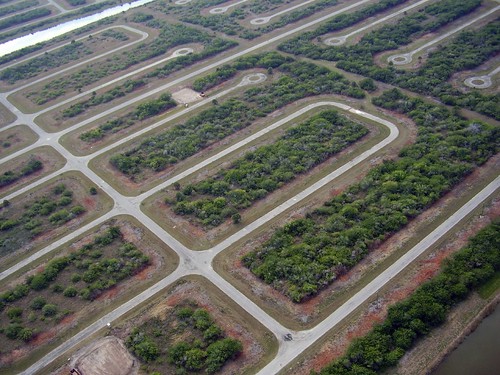
Additionally, studies show transit-oriented development (TOD) is a more fiscally sustainable form of development. Thus, the county council would do well to encourage new TOD projects around Metro, rather than clinging to far-flung sprawl projects in places that look like this:

Photo by Payton Chung
Moreover, there is no longer any market need for the county to keep extending the expiration dates on these long-stalled projects. The Great Recession has been over for quite some time now, and housing prices continue to rise in Prince George’s County. Indeed, County Executive Rushern Baker recently celebrated the county’s 61 percent increase in property values since 2010.

Lest you think that there’s no harm in extending the approvals on these dead projects, think again. Keeping old development projects in the pipeline significantly distorts the county’s true development landscape. That’s because the county still has to act as if all of the approved and unexpired development will in fact get built.

This means the county needs to plan and budget for more roads, water and sewer lines, schools, fire stations, and other public facilities to accommodate planned growth that has little possibility of ever happening. It also means new developers might be required to contribute to that new infrastructure, when it may not even be necessary for their particular projects. That puts an unnecessary burden and expense on new and otherwise viable projects, which ultimately discourages quality developers from building in the county.

The council will hold a public hearing on the latest extension bills, CB-97-2017 and CB-98-2017, on Tuesday, November 7, at 10:30 am. Please show up to testify and also contact the councilmembers to let them know your position on these bills.

Wednesday, May 31, 2017

The Purple Line is Not What Prince George’s Needs

Image adapted by author; original from MTA
With 15 Metrorail stations and 8 MARC stations, Prince George’s County already has substantial rail transit infrastructure to facilitate tremendous economic growth, walkable urban development, and regional connectivity. Yet, virtually all of these station areas have remained underdeveloped and poorly utilized for decades.

The solutions to this predicament are multifold, but they certainly do not include introducing 11 new Purple Line light rail stations to the county mix. Instead, the county should invest in a more robust local bus system and in its exiting rail transit station areas.

The Purple Line is a 16-mile, 21-station light rail project proposed by the Maryland Transit Administration (MTA) to provide more direct east-west connections between Bethesda, Silver Spring, College Park, and New Carrollton. Ten of the stations would be in Montgomery County, and eleven would be in Prince George’s. The light rail system would connect to WMATA’s Red, Green, and Orange Metrorail lines, but would not be owned or operated by Washington’s regional transit authority.

Last August and again earlier this month, the U.S. District Court for the District of Columbia ruled that the Federal Transit Administration (FTA) could not move forward with awarding federal funds to the Purple Line until the agency conducts the requisite study to prepare a supplemental environmental impact statement (SEIS). Senior U.S. District Judge Richard J. Leon’s orders provide that the SEIS must address what impacts WMATA’s continuing ridership decline (including this year) and ongoing safety issues might have on the Purple Line.

Move Beyond the “Purple Haze”

Maryland Governor Larry Hogan, MTA, and many public officials and citizens in Prince George’s and Montgomery counties were outraged by the court’s rulings, and they fear that the Purple Line project may well be permanently derailed by the delays that an SEIS would cause.

Yesterday, Maryland appealed Judge Leon's decisions to the U.S. Court of Appeals for the D.C. Circuit. No one knows yet how quickly the appellate court will rule or whether the state's appeal will ultimately be successful.

If the Purple Line is indeed dead, perhaps that is a blessing in disguise for Prince George’s County. The Purple Line has always been more of a “purple haze”—an extravagance and distraction that the county does not need and that diverts essential public resources and attention away from the real solutions to the county’s transit and economic development inadequacies.

Image adapted by author; original by Michael Phams 
This is not to say that light rail is never an appropriate transit solution. Indeed, I have previously enthusiastically supported light rail expansion in my childhood hometown region. But adding a multibillion dollar light rail system in this particular area of northern Prince George’s County—which is already quite well served by WMATA heavy rail, MTA commuter rail, and regional and local buses—is an imprudent use of public resources.

(The nonprofit group Friends of the Capital Crescent Trail and others have offered many reasons why the Purple Line also may not be a good deal for Montgomery County, the bi-county region, and the State of Maryland as a whole; but this post is focused specifically on Prince George’s County.)

Fund a Better County Bus System

If Prince George’s officials are genuinely concerned with improving transit access in the county, the first thing they should do is improve the county’s anemic local bus system. Local and express buses have the capacity to serve even the most densely populated areas in the county that are not already within a half-mile of an existing Metrorail or MARC station. Indeed, buses are better equipped to reach the county’s current scattered population.

Currently, Prince George’s “TheBus” system has only 28 routes to serve its 487-square-mile area. It generates a meager 3.7 million trips per year, or 4 trips per capita, and does not operate in the late evenings or on weekends.

By contrast, in similarly-sized and -populated Montgomery County, the local “Ride On” bus system has 78 routes serving its 494-square-mile area, and generates an impressive 26 million trips per year (with 86,000 trips on a typical weekday), or 27 trips per capita. Even in tiny Arlington County, the “ART” local bus system has 17 routes covering its 26-square-mile area, and generates 2.8 million trips annually, or 13 trips per capita.


Prince George’s annual operating budget for bus transit services is approximately $25 million, as compared to Montgomery’s $125 million. Over the next six years, Prince George’s plans to spend only about $2.1 million in capital expenditures on bus transit, as compared to the $98.2 million that Montgomery plans to spend on buses and bus stops alone over that same period.

Meanwhile, Prince George’s has agreed to pay $120 million over the next six years toward the construction of the Purple Line, which will run only in a small sliver of the comparatively affluent northern part of the county.

Stated another way, over the next six years, Prince George’s County is planning to spend less than two percent of its planned capital investment in the Purple Line on countywide bus transit. This shocking inequity in transit expenditures should have true transit advocates picketing in droves at the County Administration Building in Upper Marlboro.

Image by Ben Schumin
It’s also worth noting that federal funding for buses and related infrastructure is available from FTA, at the same 80% match rate as light rail funding. Thus, if Prince George’s focused more of its attention on developing a robust local bus system, it would likely find a willing partner in the federal government.

Purple Line supporters may rightly argue, “Why can’t we just do both—have the Purple Line and improve our bus system?” Well…we could, in theory. But there hasn’t been much political will over the years to improve the county’s bus infrastructure, so it is hard to see how that resolve would magically appear after the county shells out $120 million for the Purple Line. The better strategy would be to take care of the longstanding countywide need for more and better buses first and then evaluate whether the Purple Line still makes sense.

Manage Sprawl and Strategically Invest in Existing Station Areas

Similarly, with so many underdeveloped rail transit stations around the county (including in the Purple Line corridor), it strains credulity for officials to suggest that the county needs light rail in order to spur economic development. In fact, according to the county itself, the opposite is true: the Purple Line could actually harm Prince George’s economic growth prospects.

The county’s current comprehensive plan, Plan Prince George’s 2035, discusses the somewhat enviable dilemma the county currently faces by having too many mixed use activity “centers,” most of which are located near existing Metrorail stations. The plan contends that having too many centers can actually “undermine economic growth” by spurring scattered development that will make it difficult “to achieve the density, intensity, and form necessary to support successful mixed-use, walkable communities and economic generators” at any one center.

Image by M-NCPPC
Already, without the Purple Line, the county has 28 designated centers, 19 of which are located at existing Metrorail and MARC stations. The county predicts that it will not have enough projected growth over the next 20 years to develop all of those stations. So logic dictates that building 11 new Purple Line stations is actually contrary to the county’s stated land use and growth policies.

One thing the county could and should do to improve its ability to grow its exiting transit station areas is to reduce its pipeline of dead sprawl projects and redirect some of that projected growth capacity to its existing Metro station areas. The county should also take more of a leading role (including financially) in redeveloping and revitalizing its neighborhood-scaled gateway station areas near the District of Columbia border.

Prince George’s future transit prosperity begins not with light rail, but with more local buses—running frequently, on time, seven days a week, and connecting citizens countywide to important county destinations and to the 23 Metrorail and MARC stations already constructed in the county. Likewise, Prince George’s economic development potential does not depend on new light rail transit stations, but rather lies in its existing Metrorail and MARC stations. So instead of brooding over the possible demise of the Purple Line, let's rise up and fight like hell for the county’s true transit and economic development priorities!

Monday, September 28, 2015

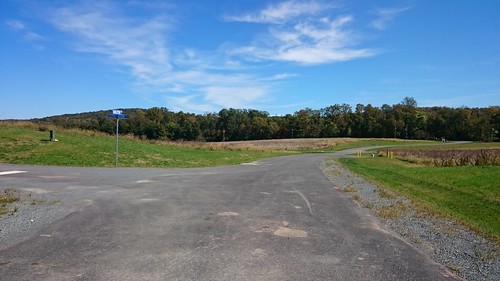
Prince George’s Should Allow Dead Sprawl Projects to Rest in Peace


Photo by Seamoor on Flickr
Ever since 2009, the Prince George’s County Council has continually extended the approval periods for unbuilt development projects, mostly consisting of single-family residential subdivisions located outside of the Beltway and away from transit.

Now, council members are considering legislation that would give these long-dead projects yet another two-year extension, through the end of 2017. It’s time for the council to give up the ghost on these projects.

Originally, the council granted these extensions to provide temporary relief to distressed developers in the wake of the Great Recession. But the recession is over. And while housing prices continue to rebound in Prince George’s, there is no current market demand for massive new single-family subdivisions outside of the Beltway. Indeed, buyers are still able to garner great deals on many spacious suburban homes that went into foreclosure during the housing bust.

These Zombie Projects Are Clogging the County's Pipeline

As I noted in 2013, it makes no sense for the council to extend the approval windows for these types of scattered sprawl projects. County planners have already concluded that such development is unhelpful for the county because it makes it “difficult to establish a critical mass of high-density development around any existing Metro station, as envisioned by the General Plan.”

More importantly, planners note that the county’s continuing lack of focus on high-quality mixed-use transit-oriented development puts it “at a continued disadvantage relative to its neighbors when it comes to attracting residents and employers who value the connectivity and amenities that other such communities provide.”

Despite those exhortations against sprawl development, the existing pipeline of approved-but-unbuilt projects outside of the Beltway led planners and the council to conclude in its current General Plan that the county actually has “too many” Metro stations, even before taking into account the future Purple Line light rail stations, and that developing all of them would “undermine economic growth.”

But if the council would instead just allow these old projects to die a natural death, the projected pipeline of residential development would dramatically decrease, and the county could readjust its long-term growth projections to include more transit-oriented development inside the Beltway. In particular, the county could decide to direct some much-needed attention toward its gateway neighborhoods and Metro stations near the D.C. border.

TAKE ACTION: The council’s Planning, Zoning, and Economic Development (PZED) Committee will consider the latest extension bills, CB-80-2015 and CB-81-2015, on Wednesday, September 30, at 1:30 pm in Room 2027 of the County Administration Building. You can use this link to address your comments to PZED Chair Andrea Harrison, with copies to committee director Jackie Brown and committee administrative aide Barbara Stone.

Sunday, April 26, 2015

Strolling Through “Downtown” New Carrollton


New Carrollton Station. Image by author.
The New Carrollton transit station in Prince George’s County—serving Metrorail, MARC, Amtrak, and a host of local, regional, and intercity buses—is the Washington region’s second-most significant multimodal transportation hub, behind Union Station in DC. Soon, Metro and county officials hope that the station will anchor the county’s first true “downtown.”

The Coalition for Smarter Growth (CSG) recently conducted an extensive walking tour of the station area to highlight the latest joint transit-oriented development (TOD) plans prepared by Urban Atlantic and Forest City Washington. WMATA and the State of Maryland selected these developers in 2010 to develop approximately 41 acres of surface parking area adjacent to and across from the station.

Image by WMATA

This project’s been a long time coming

New Carrollton’s longtime mayor, Andrew Hanko, explained how this project was the latest in a series of efforts over the past several decades to breathe life into the station area, which currently lies just outside of his city’s municipal limits. District 3 county councilwoman Dannielle Glaros echoed those sentiments and gave the group a brief history of the many comprehensive plans that the county has created for the area.

CSG policy director, Cheryl Cort, and the chief of countywide planning for the Prince George’s Planning Department, Derick Berlage, added that the county’s new General Plan fully supports this type of intensive development at New Carrollton, which is one of three “downtown” station areas slated to receive the bulk of the county’s economic development resources over the next 20 years. The others are Largo Town Center and Prince George’s Plaza.

(While I support the General Plan’s effort to direct up to half of the county’s future growth over the next 20 years to the three designated “downtowns” and five other “regional transit districts,” I continue to believe that the county can and should do more to develop and revitalize the close-in gateway Metro station areas near the DC line.)

The goal: build a viable central business district

At full build-out, these currently vacant parking lots are envisioned to have 2.7 million square feet of new TOD, including 1.3 million square feet of apartments (approximately 1,370 units), 1.1 million square feet of office space, 150,000 square feet of retail space, and 150,000 square feet of hotel space. It would look something like this:

Image by WMATA.

The first phase of development will be decidedly more modest, however: 260,000 square feet of apartments (approximately 260 units) and 13,000 square feet of retail. This is comparable to, but slightly smaller than, the Jenkins Row development across from the more neighborhood-scaled Potomac Avenue Metro Station in southeast Washington, DC, with about a quarter of the retail and slightly more residential.

Phase 1 of the project will go on the south side of the station, which has the bulk of the developable area. Just look at all this available space:

South side development areas. Image by author

Urban Atlantic’s Dan McCabe explained that starting on the station’s south side would also allow construction of the Purple Line’s eastern terminus station to proceed uninterrupted on the north side of the station, should the light rail project be approved by Governor Hogan.

If all goes as planned, groundbreaking on Phase 1 could occur as early as next year.

Stan Wall, director of WMATA’s Office of Real Estate and Station Area Planning, emphasized that future phases of development would need to be “market driven,” and that the joint development framework with Urban Atlantic and Forest City contemplates this. Essentially, WMATA would negotiate ground leases of up to 98 years for each discrete phase of the project, with a requirement that all development be transit-oriented and not interfere with Metro operations.

You can view more photos from the walking tour in this album.

* * *

Note: On Tuesday, April 28, 2015, from 5:00–8:00 p.m., the county Planning Department will host a community open house to discuss the transit district development plan for the county’s northern “downtown,” Prince George's Plaza. It will be at Prince George's Plaza Community Center, 6600 Adelphi Road, Hyattsville, MD 20782. Please attend if you can!

Tuesday, April 21, 2015

Smarter growth will expand Prince George's tax base


Capitol Heights Metro station is undeveloped. Image from WMATA.
Prince George's County Executive Rushern L. Baker III wants to raise real property tax rates by 16% to increase funding to public schools. The real way to boost Prince George's economy is to develop around its gateway Metro stations near the DC line.

Prince George's is home to the lowest median home values and highest property tax rates in the region, largely because of the low home values in its older, deteriorating communities that border the District of Columbia. Seven of the county's 15 Metrorail stations are in these gateway neighborhoods, but they all are devoid of any substantial transit-oriented development (TOD).

Improving existing home values will strengthen the tax base


Like many other suburbs, Prince George's County has historically been a bedroom community. The county's largest source of tax revenue comes from real property taxes, and 61% of taxable real estate is residential property.

It stands to reason, then, that even small increases in existing home values in the county would go a long way to raise revenues even without any major large-scale development.

Currently, median home values in the five Prince George's county subdivision areas bordering the District of Columbia fall 10-31% below the countywide median value of $269,800. If existing home values in these areas simply rose to that level, the county's taxable real estate base would increase by approximately $2.47 billion. That would add approximately $23.7 million annually in revenue to the county.

Of course, if the county got serious about developing the seven Metro stations located in these struggling communities (Capitol Heights, Addison Road, Cheverly, Southern Avenue, Naylor Road, Suitland, and West Hyattsville), real property revenues would soar much higher than the median.

Undeveloped transit station areas undermine economic growth


Shockingly, Prince George's current General Plan doesn't recommend any substantial growth around six of the seven Metro stations near the DC border over the next 20 years. (The Suitland station, next to the U.S. Census Bureau, is the exception.) Indeed, the county's planners believe there are currently "too many" Metro stations in the county and that developing all of them would "undermine economic growth."

More specifically, planners say that the six gateway Metro stations bordering DC, plus the four stand-alone MARC stations, plus all the planned stand-alone Purple Line stations should only account for 15% of the county's future growth in the next 20 years. That equates to fewer than 600 new housing units per transit station.

By contrast, the General Plan recommends putting 30-40% of the county's projected growth and development over the next 20 years—or up to 25,000 new housing units—far away from transit and mostly outside of the Beltway. This recommendation appears despite county-funded research that concludes that failing to focus on TOD puts the county "at a continued disadvantage relative to its neighbors."

Prince George's has continually squandered opportunities to focus its attention on revitalizing its neighborhoods inside the Beltway. Continuing to encourage scattered development away from transit has crippled the county financially, environmentally, and aesthetically.

Gateway communities can't wait 20 more years to redevelop


Old Central Ave at Southern Ave SE. Image by author.
The close-in Prince George's neighborhoods and Metro station areas near the DC line are likely the first thing the region's current and prospective residents think about when determining whether they would like to live and work in the county.

Until Prince George's County improves its gateway neighborhoods, it will be difficult for it to attract the region's best and brightest. The county can't wait another 20 years for that transformation to happen.

County executive Baker is rightly concerned with diversifying the county's revenue base, creating more jobs, and expanding the county's commercial tax base. To that end, he has advocated strongly for developing the end-of-line Metro stations at the Beltway's edge.

For example, he's called for the FBI to relocate its headquarters to Greenbelt Metro, for the state housing agency to relocate to New Carrollton Metro, and for a new regional medical center to come to Largo Town Center.

Likewise, the General Plan's strategy to direct 50% of future growth to the seven largest Metro stations (including the three mentioned above) plus National Harbor, and to create three "downtowns" at Largo, New Carrollton, and Prince George's Plaza, is sensible.

Still, the county's economic development strategy should also reach beyond downtown, and deeper inside the Beltway, to the neighborhood Metro stations near the District's edge. Most of the new development that the General Plan currently contemplates for outer-Beltway suburbia should instead be directed to these gateway areas.

Prince George's County cannot simply tax itself out of its last-place position in the region. Instead, its leaders need to become better stewards of the public's trust and the public's resources. The county's transit-rich gateway neighborhoods are economic engines ready and waiting to be fired up, but county leaders have to ignite the switch.

Prince George's must get serious about revitalizing its old streetcar suburbs. These vital neighborhoods can't be left to languish for another generation.


(This article is cross-posted on Greater Greater Washington.)

Monday, May 19, 2014

Prince George’s adopts “Sprawl Plan 2035” over community objections


Photo by thisisbossi on Flickr
It was supposed to be different this time. Prince George’s County’s new general plan was supposed to embrace a bold new vision for a more sustainable and transit-oriented growth strategy. Sadly, the county ultimately decided to cling to its previous failed approach of mouthing platitudes of support for walkable urban development around transit stations, while actively facilitating suburban sprawl outside of the Beltway and far away from transit.

County residents and smart growth advocates feared this eventuality when planners released the preliminary draft of Plan Prince George’s 2035, the updated countywide comprehensive plan for long-term growth and development, last fall. The draft placed too much emphasis on outer-Belway sprawl, ignored the revitalization needs of most inner-Beltway communities, and downplayed neighborhood Metro stations. At the same time, the draft plan supported massive greenfield development outside the Beltway—both at mixed-use “suburban centers” like Konterra and Westphalia, and also in scattered single-family residential subdivisions.

Each subsequent revision of the plan only made matters worse. When the Planning Board adopted its version of the plan in March, it added hundreds of acres to the exiting suburban Bowie Regional Center, which was already too disconnected from transit and well in excess of the half-mile radius that usually typifies a transit station area.

Likewise, when the County Council approved its version of the general plan earlier this month, it removed hundreds of additional acres of woodlands from the rural preservation area and placed them into the “established communities” area, making them eligible for further sprawl development. The council also added language specifically endorsing automobile-oriented suburban “town centers,” stating they “help[ed] fulfill countywide goals.”

Planners and council members repeatedly rebuffed calls for TOD fixes to plan

Ostensibly, the county's comprehensive planning process is designed to elicit meaningful public input regarding the substance of the planners’ drafts of the plan. In reality, though, the Planning Board and the County Council chose to ignore and sidestep the reforms urged by the public. They failed at nearly every turn to give fair consideration to ideas that would have helped the plan actually live up to its lofty policy pronouncements.

This pattern of public officials being dismissive of the public’s views unfortunately happens during most comprehensive planning processes in Prince George’s County—but it was supposed to be different this time.

When planners held their first town hall meeting about Plan Prince George’s last June, they appeared to be wedded to a strategy of picking 3 Metro station areas as “downtowns” and focusing most of their energies at those stations. I wondered aloud at the time whether their methodology for selecting high-performing stations was sound, whether they had a plan for how the remaining Metro, MARC, and Purple Line stations would develop over the next 20 years, and whether the planners’ continued encouragement of suburban greenfield development in “new town” centers made sense in light of what they were saying about the county’s need to focus on TOD.

Later that summer, I developed a more detailed policy paper (summarized here), setting forth various recommendations as to how planners could build upon their “3 downtowns” model by including policies and strategies that would help the county grow more smartly beyond its desired central business districts. I shared early drafts of the document with county planners and met with them to discuss it in detail.

The planners said they were surprised, but pleased, that a citizen had taken the time to develop such a comprehensive presentation. They indicated they would give serious consideration to the ideas expressed in the paper as they developed their initial draft of Plan Prince George’s. Yet, when the draft finally emerged, it did not reflect any of the policies or strategies suggested in the policy paper.

By the time the preliminary draft plan was before the Planning Board for review in March of this year, more than 100 citizens and public officials from across the county had signed a petition urging county officials to reconsider the land use priorities as expressed in the preliminary plan. Among the petition’s signatories were Maryland State Senator Joanne C. Benson, Capitol Heights Mayor Kito James, Seat Pleasant Mayor Eugene W. Grant, Forest Heights Mayor Jacqueline Goodall, and a host of civic leaders representing all 9 council districts. The Planning Board ignored these pleas and forwarded its sprawl-enhanced version of the plan to the County Council for approval on March 6.

On March 20, the petition group provided the council with a detailed set of proposed amendments to the Planning Board’s adopted version of the plan (summarized here). The Coalition for Smarter Growth also mounted an email campaign against many of the sprawl enhancements proposed by county officials.

Ultimately, the County Council turned a blind eye toward the petitioners and smart growth advocates, just as the Planning Board had. Led by council members Ingrid Turner (District 4) and Derrick Leon Davis (District 6), the council voted to approve "Sprawl Plan 2035" by a vote of 7-1. District 3 council member Eric Olson voted against the measure, and District 8 council member Obie Patterson was not present for the vote.

With that vote, the council once again sided with the well-financed developers who have fought hard to maintain the build-anywhere-you-want culture that has left Prince George's County with the least-developed and least-profitable Metro station areas in the region.

Future master plans and a better council could help undo the damage

In the end, Plan Prince George’s 2035 embodies the very same business-as-usual, undisciplined, sprawl-centered approach to future growth and development that planners cautioned the county against. While the plan says many of the right things about how and why the county should focus on developing its transit stations and reinvigorating its older communities, it ultimately allows and encourages uncontrolled sprawl growth away from transit centers and outside of the Beltway. As such, it does not provide much of an improvement over the 2002 general plan that it replaces.

Fortunately, the county does not have to wait another decade to right this wrong. Any future master plan or small-area sector plan can amend the general plan as it relates to that specific planning area. But to realize that opportunity, the county needs council members who are serious about focusing on smart growth.

Citizens need to realize what’s at stake during local elections, like the one we’re having on June 24, and choose forward-thinking leaders who can do more than just talk the talk when it comes to TOD.

Friday, March 21, 2014

Prince George’s Lawmakers Urged to Fix General Plan

Photo by MDGovpics on Flickr
(Updated March 29, 2014)

County planners have been working over the past year to revamp Prince George’s countywide comprehensive plan for future growth, known as Plan Prince George’s 2035 (“Plan 2035”). Since they released the preliminary plan draft last September, planners have received an earful—and a filing cabinet full—of public comments from concerned county citizens, who believe the plan is too encumbered by sprawl and gives scant attention to long-ignored, yet transit-rich, inner-Beltway communities. Now that the plan is before the County Council for review, calls to remedy several identified flaws in the plan are growing even louder.

Calls Increase to Fix Plan 2035 (#FixPlan2035)

Over the past several weeks, over 100 county residents have signed a petition urging county leaders to revise the plan to focus more on smart growth, transit-oriented development, and neighborhood revitalization inside the Beltway, and to turn away from the county’s traditional path of embracing massive suburban sprawl development far away from transit.

A number of state and local public officials have lent their support to the petition effort, including State Senator Joanne C. Benson, Seat Pleasant Mayor Eugene W. Grant, Capitol Heights Mayor Kito James, and Forest Heights Mayor Jacqueline Goodall. They were joined by several county civic leaders, including Douglas Edwards and Arthur Turner of the Coalition of Central Prince George’s County Civic Associations; William Cavitt of the Indian Head Highway Area Action Council; and Mike Hethmon of the Friends of Croom. Additionally, citizens from all nine of the county’s council districts have thrown their support behind the petition.

Despite the broad range of public support for reforms, the county Planning Board turned a blind eye toward the petition, failing to acknowledge its existence and not entertaining any discussion on its merits. On March 6, the board adopted and forwarded a revised version of Plan 2035 to the County Council for consideration and possible further amendment.

On March 20, as a follow-up to the petition effort, petition organizer Bradley Heard, a Capitol Heights lawyer and smart growth advocate, filed a 15-page set of proposed amendments with the County Council, urging lawmakers to revise the plan in line with the petitioners’ requests. Broadly speaking, the proposed amendments seek to do the following:
  • Revise the county’s growth policy map so that it syncs more closely with guidance provided by the Maryland Department of Planning and incorporates the targeted growth and revitalization areas previously recognized by the county and state as Sustainable Communities, Enterprise Zones, and Targeted Areas;
  • Develop a “Strategic Investment Policy” that details how the county will prioritize its infrastructure investments to catalyze development around regional and local transit centers (including assigning a high priority to Prince George’s Plaza Metro, New Carrollton Metro, and Largo Town Center Metro, where the county wants to establish “Downtowns”);
  • Simplify and clarify the descriptions of the different types of transit centers existing in the county (e.g., “Regional,” “Local,” and “Neighborhood”) and provide growth and density targets for each; and
  • Encourage mix-used transit-oriented development at all Metro, MARC, and future light rail stations, not just the 8 stations identified as “Regional” centers, and ensure that all stations are planned and zoned for densities that are supportive of rail transit.

The council will be reviewing Plan 2035 with county planners during informal, unrecorded "work sessions" that occur during the middle of the business day. While these sessions are technically open to the public, few citizens are actually aware of or able to attend and participate in these sessions. Petition organizers have urged the council to hold evening and weekend sessions to allow for greater public participation.

Under the current schedule, the council must either act to reject or accept the plan (with or without amendments) by May 6.

How would the proposed amendments improve Plan 2035?

Here’s a quick example of how the proposed amendments would address some of the more schizophrenic and unhelpful elements of the adopted version of Plan 2035. The plan's revised Land Use section has a subheading that states, “Too Many Centers Undermine Economic Growth.” Planners base that claim on the current low projections for future transit-oriented growth that the Metropolitan Washington Council of Governments (MWCOG) has predicted for Prince George’s County, based on the county's current non-transit-oriented growth trajectory. Plan 2035 acknowledges that there is “robust regional demand for transit-accessible development”; but since MWCOG thinks so little of it will come to the county, the plan concludes that we should only plan to build out 7 of our “regional” Metro stations (Greenbelt, College Park, PG Plaza, New Carrollton, Largo, Branch Ave, and Suitland), plus National Harbor.

The other 8 Metro stations…and the 6 other MARC stations…and the 6 other future Purple Line stations…and the 4 other future Southern Maryland Transit Corridor light rail stations that aren’t part of the “regional” category are relegated to the status of “local” centers and lumped in with massive non-transit-oriented future greenfield suburban sprawl projects like Westphalia and Konterra. Housing densities at the “local” Metro, MARC, and light rail stations are capped at levels that are not conducive to support rail transit (i.e., below 30 dwelling units per acre), and employers are discouraged from locating there. Meanwhile, housing densities at the greenfield sprawl sites are allowed to reach up to 40 dwelling units per acre, and those sites are projected to have hundreds of thousands of square feet of office space.

Our proposed amendments take a different approach. We view all of our transit stations as valuable assets, not as albatrosses that “undermine economic growth.” Therefore, the amendments increase the density targets at these stations to levels that are supportive of transit and encourage appropriately scaled mixed-use development (including jobs) to come to all transit stations. They also provide that a reasonable portion of the county's annual capital improvement expenditures will directed to these stations. While all these non-“regional” stations may not develop instantaneously, there’s no need to stifle development in those locations by capping density and not investing in them.

More importantly, given that our existing and planned transit stations and our other inner-Beltway growth areas and existing suburban sites like Bowie will provide virtually unlimited growth capacity for the county for the foreseeable future, the proposed amendments eliminate the sprawl category of “Town Centers” and do not promote additional greenfield development sites away from transit.

If these are the types of changes you support, please sign the petition and also separately call or email your council member to support the proposed amendments.

--
NOTE: If the above PDF Portfolio link to the proposed amendments will not open with your version of Adobe Reader, try these separate links to the cover letter and the attachment containing the proposed amendments.

Wednesday, February 26, 2014

Residents, City Leaders Urge Prince George's County to Reconsider Land Use Priorities


Image by M-NCPPC
(Updated March 4, 2014)

More than 100 Prince George’s County residents and municipal officials have signed onto a petition urging County Council members and planning commissioners to revise the current draft of the county’s General Plan. They are advocating for increased focus on developing neighborhood transit station areas and revitalizing existing older communities inside the Beltway, rather than on pursing new suburban sprawl projects.

The General Plan is the county’s long-range comprehensive roadmap that guides future growth and development. Maryland law requires counties to update their general plans at least once a decade, following the census. The Maryland-National Capital Park and Planning Commission (M-NCPPC) published the preliminary draft of “Plan Prince George’s 2035” last fall and held an initial joint public hearing with the County Council in November. Planners have spent the past several weeks reviewing and responding to oral and written public comments received through mid-December.

The preliminary plan draft recommends that 50% of the county’s future growth over the next 20 years should go to eight “Regional Transit Centers,” including National Harbor (which currently lacks a rapid transit connection) and seven of the county’s 15 Metrorail stations. But the plan also recommends that 30-40% of the county’s future growth should go to greenfield suburban developments outside of the Beltway and away from transit, such as the planned Westphalia Town Center near Upper Marlboro. Only 15% of future growth is recommended to go to the county’s remaining 20 Metro, MARC, and future Purple Line stations.

Many citizens and public officials have expressed concern that the preliminary plan unwisely prioritizes outer-Beltway sprawl over transit-oriented development (TOD) and revitalization. Lillie Thompson-Martin, mayor of the town of Fairmount Heights, charged that the plan was “starving the older established communities” by refusing them any meaningful revitalization assistance. She urged the county to designate her town and the surrounding unincorporated communities as “Neighborhood Revitalization Areas.”

Eugene W. Grant, mayor of the nearby city of Seat Pleasant, agrees. His petition comments urged the county to reevaluate how the plan treats Metrorail-accessible communities like his, saying they had been “overlooked” for “far too long” and that they have "tremendous potential." Grant further noted that refocusing on transit-oriented development around Metro stations would “stabilize our economy, create jobs, offer opportunities for local entrepreneurship … and so much more.”

Striking a similar tone, Capitol Heights mayor Kito James stated that inner-Beltway communities are the “future economic engine for Prince George's County,” and that reinvesting in the county's transit-rich core would elevate the county to “a new level of prosperity.” James noted that Montgomery County and Northern Virginia often outpace Prince George's because they have pursued an economic and land development strategy centered on "focused inner core reinvestment." 

Rev. Douglas Edwards, president of the Coalition of Central Prince George's County Community organizations, echoed the mayors' sentiments in his petition comments. "The inner-Beltway has been ignored far too long," Edwards said, citing specifically to the county's failure to develop the Addison Road and Morgan Boulevard Metro stations on the Blue Line. Those stations and the Capitol Heights station all have a number of redevelopment opportunity areas, including vacant parcels, within easy walking distance.

Even suburban county residents support a refocusing of the plan’s development priorities inside the Beltway, close to transit. Clinton resident Mary Forsht-Tucker lamented that creating additional automobile-oriented suburban town centers, as contemplated by the preliminary plan, would further clog already-overcrowded roads and make the quality of life “unbearable” for existing residents. “Doing away with the goal of having large developments built near mass transit makes a mockery of the decades of planning that preceded this Plan 2035,” she said.

Michael Hethmon, spokesperson for the Friends of Croom in southern Prince George’s County, argued that “rural tier preservation cannot occur without inside-[Beltway] TOD as the top goal of county planning.” Another civic leader, Indian Head Highway Area Action Council president William Cavitt, remarked that suburban sprawl was "self-defeating" and put the county in a "deeper financial hole."

The petition was created by Capitol Heights resident Bradley Heard, an attorney and civic activist who runs the smart growth-oriented blog Prince George’s Urbanist. It urges county leaders to revise the General Plan to direct 25-30% of future growth to local transit, neighborhood, or campus centers; to limit outer-Beltway suburban development to 10-15% of future growth; and to designate all areas designated as a Maryland Sustainable Community, Targeted Area, or Enterprise Zone as “Neighborhood Revitalization Areas.”

The preliminary draft of Plan Prince George’s 2035 is not yet final. M-NCPPC will consider the public comments received thus far and may make additional revisions to the preliminary plan before formally adopting it and sending it on to the County Council for further hearings. The County Council, which sits as the “District Council” when it considers land use matters, may make further revisions before approving the final General Plan sometime later this spring or summer.

To view the petition, click here. For more information on the preliminary plan draft, click here.


Thursday, February 20, 2014

Outer-Beltway focus threatens Prince George’s new General Plan


Image by M-NCPPC
Last year, Prince George's County planners kicked off a bold effort to revise the countywide comprehensive plan and direct future growth primarily to transit stations inside the Beltway. But a continuing focus on sprawling suburban developments on the county's fringes could thwart those worthy goals.

The Planning Department has been working on "Plan Prince George's 2035," an update of the General Plan that sets out the county's blueprint for long-term growth and development. It proposes directing most growth to a few "downtown" areas at major Metro stations inside the Beltway. Planners also stressed the need to revitalize older established communities and preserve natural resources.

Throughout the process, planners urged the county to be "bold and forward thinking" and to reject the "business as usual" approach of supporting sprawl development, which would only continue the county’s historical role as a bedroom community with limited retail options and few jobs. But the County Executive's and County Council's continuing enthusiasm for big greenfield developments like Westphalia and Konterra, will only continue this pattern by directing growth away from downtowns.

Preliminary draft plan reflects council’s desire for more “business as usual”

The preliminary draft of Plan Prince George's 2035, released in September, is graphically impressive and chock-full of data. Planners have spent the past several weeks reviewing, digesting, and responding to public comments received in November and December.

In many ways, the preliminary draft plan lays out the right overall vision and framework for how the county should "live, work, and sustain" over the next 20 years. For example, it says that 50% of the county's growth should go to one of eight "Regional Transit Centers": Largo Town Center, New Carrollton, Prince George's Plaza, Branch Avenue, College Park, Greenbelt, Suitland, and National Harbor. Of these, only National Harbor is not Metro-accessible, and all of these areas are either inside or adjacent to the Beltway.

In many other ways, however, Plan Prince George's 2035 is at odds with the planners' stated vision. It's too permissive of allowing growth to continue in the sprawling areas of the county that lie outside the Beltway and away from transit. Inside the Beltway, the preliminary plan misses the mark in identifying existing neighborhoods most in need of capital investments to catalyze revitalization and redevelopment.

Image by Magnus D on Flickr

New “Suburban Centers” and sprawling subdivisions away from transit encourage growth in the wrong places

The plan identifies five “Suburban Centers,” all located outside the Beltway and away from transit: Bowie, Brandywine, Landover Gateway, Westphalia and Konterra. Planners envision that these centers will be "larger in size" than development around Metro stations and will "rely more on vehicular transportation."

According to the plan, 6,300 new homes should be built in these areas, representing 10% of the county's growth over the next 20 years. But Konterra and Westphalia alone are already approved for 9,500 homes, or 15% of the county's projected growth. Add the approved and planned development at Woodmore Towne Centre and the old Landover Mall (both at Landover Gateway), as well as Bowie and Brandwine, and Suburban Centers could easily be responsible for more than 20% of Prince George's projected future growth.

County planners may have felt they had to include these “Suburban Centers” because they're already reflected in existing master plans. Additionally, County Executive Rushern Baker and many County Council members continue to vigorously support growth and development in these areas. But the point of the General Plan is to provide a blueprint for the county's future growth, not to ratify the bad growth decisions of the past.

The preliminary plan also recommends directing another 20% of the county's growth to so-called "Established Communities," which refers to every place in the county that's eligible for public water and sewer connections. But such an overarching designation, which includes many areas that are currently undeveloped, turns the whole concept of “established” on its head and does virtually nothing to control sprawl.

Last fall, the County Council extended the validity periods for several previously approved but still-unbuilt projects dating to before the housing bust. Eighty percent of those projects are for single-family subdivisions in undeveloped areas outside the Beltway.

With the "Suburban Centers" and "Established Communities," as contemplated in the preliminary plan, over 40% of the county's projected growth will occur in outer-Beltway suburbia, away from transit. This can hardly be the "bold" direction that planners originally envisioned.

Plan doesn’t direct enough resources for inside-the-Beltway communities

In contrast to the massive growth planned for "Suburban Centers" and "Established Communities," the draft plan only anticipates 15% of the county's growth going to the 20 Metro, MARC, Purple Line, and other transit stations inside the Beltway that are designated as local transit, neighborhood, or campus centers. There's little mention in the plan of public funds for capital improvements, like new streets or public facilities, and other catalytic investment in these areas, meaning even that tiny amount of growth is not likely to materialize.

Additionally, the draft plan focuses its "Neighborhood Reinvestment Area" priorities solely on the six neighborhoods that County Executive Baker designated in his 2012 Transforming Neighborhoods Initiative (TNI) program, which provides educational, public health, and public safety resources to communities particularly plagued by crime.

In her public testimony, Lillie Thompson-Martin, mayor of the town of Fairmount Heights, rightly criticized the preliminary draft of Plan Prince George's 2035 for "starving the older established communities," refusing them any meaningful revitalization assistance.

State-designated revitalization opportunity areas like this, across from the Addison Road Metro Station, get little attention in Plan Prince George’s 2035. Image from Google Earth.

A better approach would have the plan focus on those areas that county and state economic development officials have already identified as most in need of revitalization. Maryland has designated several Prince George's communities as either a Sustainable Community, Targeted Area, or Enterprise Zone. This would encompass most of the inner-Beltway Metro station areas designated as Local Transit Centers or Neighborhood Centers, like West Hyattsville and Addison Road, and many other older communities, like Brentwood, Mount Rainier, and Capitol Heights.

Tell Prince George’s it’s time to change directions

Although the public comment period has passed, the final draft of Plan Prince George's 2035 has not yet been adopted. The Planning Board and the County Council still have to meet and vote to adopt the final plan.

If you believe that Prince George's needs to make developing our Metro stations and revitalizing inside-the-Beltway communities a priority, please sign this online petition via Change.org. You can also write separately to the Planning Board and County Council and urge them to hold another public hearing. For the Planning Board, send your emails to the Public Affairs Department, with copies to Planning Director Fern Piret and Deputy Planning Director Al Dobbins.

For the County Council, send your emails to Council Chair Mel Franklin, with copies to the Clerk of the Council and Ingrid Turner, chair of the council's Planning, Zoning, and Economic Development committee.


(This article is cross-posted on Greater Greater Washington.)

Monday, December 16, 2013

Last Day to Submit Comments on Plan Prince George's 2035

Today is the last day to submit public comments on the preliminary draft of Plan Prince George's 2035, the county's update to its comprehensive countywide General Plan for future growth and development. The Prince George's County Planning Board of the Maryland-National Capital Park and Planning Commission (M-NCPPC) held a joint public hearing with the Prince George's County Council on November 12 to receive oral comments on the draft plan. The written comment period was extended until 5:00 p.m. today, December 16, 2013.

County planners will review and digest all public comments received by the deadline and decide whether to recommend any additional amendments to the preliminary draft of the General Plan. If there are significant amendments, the planners and the County Council may schedule another joint public hearing in advance of adopting and approving a final document.

Because all comments must be received by 5:00 p.m. today, you should email or hand-deliver your comments to the council. Emails should be sent to clerkofthecouncil@co.pg.md.us, and you  must also send a hardcopy of your comments via mail to:

The Clerk of the County Council
County Administration Building
14741 Governor Oden Bowie Drive
Upper Marlboro, MD 20772

My public comments are below:

December 15, 2013

Ms. Redis C. Floyd, Clerk
Prince George’s County Council
14741 Governor Oden Bowie Drive, Room 2198 
Upper Marlboro, MD 20772

Re:      Public Comments Regarding Plan Prince George’s 2035

Dear Ms. Floyd:

Please accept this correspondence as my written public comments regarding the preliminary draft of Plan Prince George’s 2035. This past summer, in advance of the preparation of the preliminary draft, I met with the Planning Department staff and shared with them a draft of a policy paper that I had written, which addressed several issues that I believed should be considered in the county’s General Plan update. That document, entitled Plan Prince George’s 2035: Thinking and Growing Smartly Downtown and Beyond, is available online at http://bit.ly/1buHzbx and is incorporated herein by this reference.

As I communicated to the staff during my meetings with them this past summer, and in my policy paper, I believe the Planning Department has done exceptional work in the planning and preparation of this preliminary draft. By and large, this plan sets out a bold vision for Prince George’s County’s future growth and development. 

I offer the comments below in an effort to ensure that the final draft of Plan Prince George’s 2035 remains closer to its overall goal of ensuring a county that “develops sustainably and equitably[;] . . . directs new development to existing transit-oriented centers; focuses public investment on its economic engines; capitalizes on and maintains its infrastructure; strengthens its established communities; and proactively preserves its natural, historic, and cultural  resources.”

Growth Policy Map (Map 1, pp. 12-16, 78)
  • Differentiate between local and suburban centers. Among the local centers, differentiate between those that are Metro-accessible and those that aren’t.
  • Reconsider the statement, “Suburban Centers will often be larger in size and may rely more on vehicular transportation.” 
    • Automobile-oriented suburban centers should not be larger than local, Metro-accessible centers.
    • Non-exiting suburban centers that aren’t currently connected to transit (e.g., Westphalia, Konterra, Brandywine) should not be designated.
  • The “Established Communities” area outside the Beltway is still too massive. It doesn’t differ substantially from the sprawling “Developing Tier” of the 2002 plan. More of this area needs to be moved to “Reserve Areas” or “Agriculture Areas.”
    • The existence of public water and sewer service shouldn’t be the only criterion by which land area is considered for “Reserve Areas.”
    • All areas outside of the Beltway that are identified in the 2005 Countywide Green Infrastructure Functional Master Plan as a Regulated Area, Evaluation Area, or Network Gap should be carefully evaluated for designation as a “Reserve Area” or “Agriculture Area” in this update to the General Plan.
    • If the area is presently undeveloped and is not served by existing roads (or roads that are bonded and fully funded for construction), then the area should be designated as a Reserve Area. 
    • If the undeveloped area consists of more than 25 contiguous acres of forest lands, it should be designated as an Agriculture Area.
    • Established Communities should be limited to platted subdivisions with existing (or bonded and fully funded) roads and constructed housing that occupies at least 25% of the lots of the subdivision.
Priority Investment Map (pp. 17-19, 189)
  • The Neighborhood Reinvestment Areas should be expanded to include any area that, as of October 1, 2013, was designated as a Maryland Sustainable Community (including any area previously designated by DCHD as a Community Legacy Area or Designated Neighborhood), Targeted Area, or Enterprise Zone. 
  • The six neighborhoods designated in 2011 in connection with the County Executive’s “Transforming Neighborhoods Initiative” (TNI) program represent only a miniscule sample of the county neighborhoods that “have experienced a marked decline in property values, critical services, and neighborhood amenities and an increase in crime.” Most of the areas inside the Beltway, including the entirety of the 20743 Zip Code (including the municipalities of Capitol Heights, Fairmount Heights, Seat Pleasant, and the surrounding unincorporated areas) fall within this category and are no less deserving of designation as Neighborhood Reinvestment Areas.
  • The state Sustainable Community, Targeted Area, and Enterprise Zone designations were intended to identify communities and neighborhoods in need of reinvestment. Additional funding from the state is available in all of these designated areas to assist with reinvestment and revitalization. All of the TNI areas fall within one or more of these state designations. It would make little sense for the General Plan not to include as Neighborhood Reinvestment Areas those locations that have already been designated  as Sustainable Communities, Targeted Areas, and Enterprise Zones. 

Generalized Future Land Use Map (pp. 79-81)

  • The “Residential Medium-High” category should be > 8 and <= 40 DU/Ac (instead of maxing out at 20). This will overlap with the “Residential High” category, whose minimum DU/Ac should remain at >20
  • All 15 Metro station centers should be designated as “Mixed Use,” not “Residential.”
Plan 2035 Regional Transit and Local and Suburban Centers (p. 83)
  • Reconsider the following statement: “In support of the Plan 2035 growth concept, the eight Regional Transit Centers (which include the Priority Investment Districts and Primary Employment Areas) are the focus of the county’s planned growth and mixed use development. The Local and Suburban Centers are secondary, and provide smaller scale opportunities for development. Because the employment and office growth that is anticipated over the next 20 years is limited and the counties’ retail market is saturated, it is important to focus the commercial growth to the Regional Transit Centers in the near term.”
  • While the county’s largest employers (e.g., major federal and state agencies) should be located at the Regional Transit Centers, the plan should not discourage the development of vibrant mixed-use centers at other Metro stations, where such development is feasible. 
  • Consider the following alternative language: “In support of the Plan 2035 growth concept, the county should focus its planned growth and mixed use development at regional and local centers that are well connected to rail transit. The county’s largest employers and retailers should be encouraged to develop at the eight Regional Transit Centers (which include the Priority Investment Districts and Primary Employment Areas). Smaller office and retail development should be directed to Local Transit Centers. Local or suburban centers that are not connected to rail transit should have only neighborhood-serving retail and very limited office uses, such as individual live-work condominium units.” 

Growth Policy #1, Table 15: Growth Management (p. 90)

  • Separate out the local centers from the suburban centers, and change the following DU percentages to:
    • Local Centers - 25% (15,750 DUs)
    • Suburban Centers - 9% (5,670 DUs)
    • Established Communities - 5% (3,150 DUs)
    • Rural & Agricultural: 1% (630 DUs)

Thank you for the opportunity to offer these public comments. Should you have any questions or need additional information, please do not hesitate to contact me. 

Sincerely yours,
/s/ Bradley E. Heard
Bradley E. Heard


Sunday, October 20, 2013

“Hail to the Redfins… Fight for Old P.G.!”


Photo by Keith Allison on Flickr
Let’s face it: the Washington Redskins may officially be DC’s football team, but their home stadium, FedEx Field, is in Prince George’s County, Maryland. Like any good hometown fans, we yearn for the team to be successful, as they were (finally) Sunday, with their 45-41 victory over the Chicago Bears.

But beyond the gridiron, the Skins and their owner, Dan Snyder, can make Prince George’s and the Washington region even prouder by (1) heeding the call to change the team’s offensive name, and (2) advocating for an inside-the-Beltway extension of the Purple Line to Alexandria, via FedEx Field.

Introducing the “Washington Redfins”!

Last week, Prince George’s County Executive Rushern Baker joined the increasing chorus of public figures urging the Skins to change their name. “For me, if it’s offending anyone…I think you should consider changing the name,” he said. Baker’s comments echoed those of President Obama, who earlier this month said that he too would think about changing the team’s name.

Maryland Congresswoman Donna F. Edwards, whose district includes FedEx Field, has cosponsored legislation that would ban trademark protection for any name that includes the word “redskin” or any of its derivatives. Progressive media outlets are increasingly refusing to refer to the team by their official name. Even conservative columnist Charles Krauthammer believes it’s time to let the name go—not because of political correctness, but because common decency dictates the abandonment of a name that has become “tainted, freighted with negative connotations with which you would not want to be associated.”

Over the years, we have seen no shortage of suggestions for alternate names for Washington’s football team. Krauthammer and others prefer simply shortening the name to the “Skins,” which many people commonly do already. Another proposal, recently resurrected by PETA, is to keep the name “Redskins” but change the logo to a potato:

Image by PETA.

But who wants to root for a frigging spud?! We need a mascot that connotes power and might, one that evokes fear and trepidation in opponents—something exotic, yet familiar. Ladies and gentlemen, I give you…the Washington Redfins!

As described by the New South Wales government in Australia, “Redfin are a popular sport fish…because of their fighting qualities and taste. However, they are also voracious predators of other fish and invertebrates…and can devastate native fish populations…. For these reasons, redfin are considered a serious pest and…a Class 1 noxious species in [the country].”

Image by New South Wales (Australia) government.

Talk about a fearsome little fish! Yet, they are sporty, they fight well, and they taste good. What more can we ask in a mascot? We could even keep the same fight song and tune, making only the simplest of modifications in the lyrics:
Hail to the Redfins. Hail, victory.
Pride of the Nation, [or, “Potomac war fish,”]
Fight for old D.C.!

Let’s say goodbye, once and for all, to the team’s current offensive moniker and start swimming with the mighty Redfins!

UPDATE (10/25/2013): Since posting this, The Washington Post's Eugene Robinson has joined the chorus of those urging a change in the team's name. Also, The Onion put out a stinging, epithet-charged piece attacking team owner Dan Snyder's insensitivity. And the Washington City Paper is reporting about a possible under-the-radar effort to rename the team the "Washington Bravehearts."

Making a Play for the Purple Line at FedEx Field

Another way that Prince George’s hometown football team can help itself and also be a good corporate citizen is by advocating for an inside-the-Beltway extension of the Purple Line from New Carrollton to Alexandria, via FedEx Field.

As currently planned, the Purple Line will run from Bethesda to New Carrollton, with 11 stops in Prince George’s County. However, county planners have already begun to think about possible extensions of the Purple Line that would go to National Harbor, and then across the transit-ready Wilson Bridge to Eisenhower Avenue or King Street Station in Alexandria.

The county’s 2009 Master Plan of Transportation recommended a feasibility study for an outside-the-Beltway Purple Line extension that would serve Largo Town Center, Prince George’s Community College, the proposed Westphalia Town Center development, Joint Base Andrews, Branch Avenue or Suitland Metro, and the Oxon Hill/National Harbor area.

In 2012, the county’s Transitway Systems Planning Study considered three potential alternative alignments for a Purple Line extension. One proposal (PLX1) had the line running primarily inside the Beltway. Two others (PLX2 and PLX3) proposed a largely outer-Beltway route. Interestingly, two of the proposed routes (PLX1 and PLX2) would have allowed the Purple Line to serve FedEx Field and Morgan Boulevard Metro Station on the Blue Line. Yet, the study ultimately favored the proposed outer-Beltway alignment that did not serve FedEx Field.

Earlier this summer, I proposed a fourth possible alignment for the Purple Line extension. This inner-Beltway route would serve Largo Town Center Metro, FedEx Field, Morgan Boulevard Metro, Penn/Mar Shopping Center, Branch Avenue Metro, Marlow Heights Shopping Center, and National Harbor/Oxon Hill before heading across the Wilson Bridge.

Image by Maryland Transit Administration.
It would be a tremendous demonstration of corporate leadership and responsibility if the newly-named Redfins were to advocate strongly with Prince George’s County and Maryland Transit Administration officials for a Purple Line extension to FedEx Field on an inner-Beltway alignment. Taking such a stand in favor of sustainable and transit-oriented development growth principles could be transformative for the county and beneficial to the team.

Instead of relying solely on parking revenues on game day, the Redfins owners could redevelop the vast ocean of surface parking at FedEx Field into a vibrant mixed-use community that produces income on a daily basis, and even more so on game days. Similarly, other owners of existing automobile-oriented commercial property along the proposed light rail route would be able to redevelop their aging commercial centers into more profitable, compact, and walkable urban places.

Step up to the scrimmage line, Mr. Snyder. Prince George’s County needs you in the game!