Showing posts with label transit. Show all posts

Wednesday, May 31, 2017

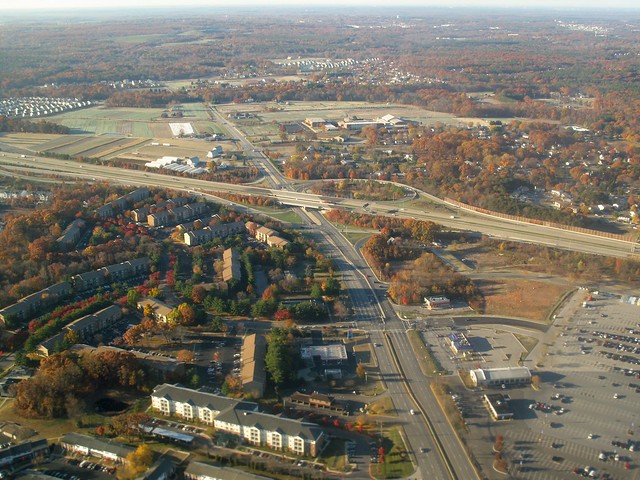
The Purple Line is Not What Prince George’s Needs

Image adapted by author; original from MTA
With 15 Metrorail stations and 8 MARC stations, Prince George’s County already has substantial rail transit infrastructure to facilitate tremendous economic growth, walkable urban development, and regional connectivity. Yet, virtually all of these station areas have remained underdeveloped and poorly utilized for decades.

The solutions to this predicament are multifold, but they certainly do not include introducing 11 new Purple Line light rail stations to the county mix. Instead, the county should invest in a more robust local bus system and in its exiting rail transit station areas.

The Purple Line is a 16-mile, 21-station light rail project proposed by the Maryland Transit Administration (MTA) to provide more direct east-west connections between Bethesda, Silver Spring, College Park, and New Carrollton. Ten of the stations would be in Montgomery County, and eleven would be in Prince George’s. The light rail system would connect to WMATA’s Red, Green, and Orange Metrorail lines, but would not be owned or operated by Washington’s regional transit authority.

Last August and again earlier this month, the U.S. District Court for the District of Columbia ruled that the Federal Transit Administration (FTA) could not move forward with awarding federal funds to the Purple Line until the agency conducts the requisite study to prepare a supplemental environmental impact statement (SEIS). Senior U.S. District Judge Richard J. Leon’s orders provide that the SEIS must address what impacts WMATA’s continuing ridership decline (including this year) and ongoing safety issues might have on the Purple Line.

Move Beyond the “Purple Haze”

Maryland Governor Larry Hogan, MTA, and many public officials and citizens in Prince George’s and Montgomery counties were outraged by the court’s rulings, and they fear that the Purple Line project may well be permanently derailed by the delays that an SEIS would cause.

Yesterday, Maryland appealed Judge Leon's decisions to the U.S. Court of Appeals for the D.C. Circuit. No one knows yet how quickly the appellate court will rule or whether the state's appeal will ultimately be successful.

If the Purple Line is indeed dead, perhaps that is a blessing in disguise for Prince George’s County. The Purple Line has always been more of a “purple haze”—an extravagance and distraction that the county does not need and that diverts essential public resources and attention away from the real solutions to the county’s transit and economic development inadequacies.

Image adapted by author; original by Michael Phams 
This is not to say that light rail is never an appropriate transit solution. Indeed, I have previously enthusiastically supported light rail expansion in my childhood hometown region. But adding a multibillion dollar light rail system in this particular area of northern Prince George’s County—which is already quite well served by WMATA heavy rail, MTA commuter rail, and regional and local buses—is an imprudent use of public resources.

(The nonprofit group Friends of the Capital Crescent Trail and others have offered many reasons why the Purple Line also may not be a good deal for Montgomery County, the bi-county region, and the State of Maryland as a whole; but this post is focused specifically on Prince George’s County.)

Fund a Better County Bus System

If Prince George’s officials are genuinely concerned with improving transit access in the county, the first thing they should do is improve the county’s anemic local bus system. Local and express buses have the capacity to serve even the most densely populated areas in the county that are not already within a half-mile of an existing Metrorail or MARC station. Indeed, buses are better equipped to reach the county’s current scattered population.

Currently, Prince George’s “TheBus” system has only 28 routes to serve its 487-square-mile area. It generates a meager 3.7 million trips per year, or 4 trips per capita, and does not operate in the late evenings or on weekends.

By contrast, in similarly-sized and -populated Montgomery County, the local “Ride On” bus system has 78 routes serving its 494-square-mile area, and generates an impressive 26 million trips per year (with 86,000 trips on a typical weekday), or 27 trips per capita. Even in tiny Arlington County, the “ART” local bus system has 17 routes covering its 26-square-mile area, and generates 2.8 million trips annually, or 13 trips per capita.


Prince George’s annual operating budget for bus transit services is approximately $25 million, as compared to Montgomery’s $125 million. Over the next six years, Prince George’s plans to spend only about $2.1 million in capital expenditures on bus transit, as compared to the $98.2 million that Montgomery plans to spend on buses and bus stops alone over that same period.

Meanwhile, Prince George’s has agreed to pay $120 million over the next six years toward the construction of the Purple Line, which will run only in a small sliver of the comparatively affluent northern part of the county.

Stated another way, over the next six years, Prince George’s County is planning to spend less than two percent of its planned capital investment in the Purple Line on countywide bus transit. This shocking inequity in transit expenditures should have true transit advocates picketing in droves at the County Administration Building in Upper Marlboro.

Image by Ben Schumin
It’s also worth noting that federal funding for buses and related infrastructure is available from FTA, at the same 80% match rate as light rail funding. Thus, if Prince George’s focused more of its attention on developing a robust local bus system, it would likely find a willing partner in the federal government.

Purple Line supporters may rightly argue, “Why can’t we just do both—have the Purple Line and improve our bus system?” Well…we could, in theory. But there hasn’t been much political will over the years to improve the county’s bus infrastructure, so it is hard to see how that resolve would magically appear after the county shells out $120 million for the Purple Line. The better strategy would be to take care of the longstanding countywide need for more and better buses first and then evaluate whether the Purple Line still makes sense.

Manage Sprawl and Strategically Invest in Existing Station Areas

Similarly, with so many underdeveloped rail transit stations around the county (including in the Purple Line corridor), it strains credulity for officials to suggest that the county needs light rail in order to spur economic development. In fact, according to the county itself, the opposite is true: the Purple Line could actually harm Prince George’s economic growth prospects.

The county’s current comprehensive plan, Plan Prince George’s 2035, discusses the somewhat enviable dilemma the county currently faces by having too many mixed use activity “centers,” most of which are located near existing Metrorail stations. The plan contends that having too many centers can actually “undermine economic growth” by spurring scattered development that will make it difficult “to achieve the density, intensity, and form necessary to support successful mixed-use, walkable communities and economic generators” at any one center.

Image by M-NCPPC
Already, without the Purple Line, the county has 28 designated centers, 19 of which are located at existing Metrorail and MARC stations. The county predicts that it will not have enough projected growth over the next 20 years to develop all of those stations. So logic dictates that building 11 new Purple Line stations is actually contrary to the county’s stated land use and growth policies.

One thing the county could and should do to improve its ability to grow its exiting transit station areas is to reduce its pipeline of dead sprawl projects and redirect some of that projected growth capacity to its existing Metro station areas. The county should also take more of a leading role (including financially) in redeveloping and revitalizing its neighborhood-scaled gateway station areas near the District of Columbia border.

Prince George’s future transit prosperity begins not with light rail, but with more local buses—running frequently, on time, seven days a week, and connecting citizens countywide to important county destinations and to the 23 Metrorail and MARC stations already constructed in the county. Likewise, Prince George’s economic development potential does not depend on new light rail transit stations, but rather lies in its existing Metrorail and MARC stations. So instead of brooding over the possible demise of the Purple Line, let's rise up and fight like hell for the county’s true transit and economic development priorities!

Saturday, June 18, 2016

Commuters Need More Public Transit Alternatives to Survive SafeTrack Surge #2

Image by WMATA
As WMATA begins its 16-day shutdown of all Metrorail service across the Anacostia River, it is hoping that 60-70 percent of its ordinary ridership east of the river will simply abandon the rail transit system in favor of alternative modes of transportation.

That’s not likely to happen, though, unless officials provide more realistic public transit alternatives, such as additional bus shuttles to the Green Line and designated HOV lanes.

This second safety surge of Metro’s yearlong SafeTrack program of major repairs will run through July 3. During that time, Potomac Avenue and Stadium Armory stations on the Orange, Blue, and Silver (OR/BL/SV) lines will be completely closed. That means the approximately 25,000 commuters in Prince George’s County and in DC’s Ward 7 who normally ride those lines will need to find some other way to get to and from downtown Washington and Northern Virginia.

Metro’s website has compiled a detailed list of the current mitigation plans that WMATA, District, and Prince George’s officials have developed. The plans include 40 shuttle buses from Minnesota Avenue and Benning Road to Eastern Market and expanded Metrobus service on several key routes into the District.

That's a great start. However, officials readily acknowledge that the current mitigation plans are not sufficient to meet existing demands. They have stressed that commuters should avoid the Metrorail system if they can, particularly during peak periods. They suggest telecommuting, carpooling, and bicycling as potential alternatives, in addition to Metrobus.

But not everyone can telecommute or change their work schedules, and it’s unreasonable for officials to expect that employers will allow their workers to stay home for two full work weeks. Similarly, biking and carpooling are often not realistic options for many commuters.

Local Government is Ultimately Responsible for Providing Effective Transit Solutions

Fundamentally, SafeTrack is a public transportation crisis, and it needs a public transportation solution. A mitigation plan that relies on 60-70 percent of the relevant population disappearing from the public transit system for more than two weeks is simply not an adequate or effective plan.

On Thursday, Prince George’s County Executive Rushern Baker rightly chastised the State of Maryland for not doing enough to help mitigate SafeTrack. Maryland Transportation Secretary Pete Rahn has been noncommittal on what, if any, services and funds the state will offer its DC metro-area counties in connection with these Metro repairs. To be sure, the state’s aloofness in the face of this crisis is troubling. Nevertheless, it can’t absolve the county from taking primary responsibility for providing workable transit solutions.

For its part, WMATA has consistently stressed that it needs the local jurisdictions to share in the pain of SafeTrack by providing additional resources and coordination—including bus support and traffic controls such as HOV lanes. WMATA is already significantly underfunded by the region; therefore, it is not surprising that it has only limited additional resources of its own to provide.

Bottom line: County Executive Baker, District of Columbia Mayor Muriel Bowser, and their respective transportation departments are principally accountable for ensuring that SafeTrack will not cripple their residents. This is a quintessential local public safety and welfare issue that cannot be delegated to anyone else, including WMATA or the State of Maryland.

We Need Designated HOV/Bus Lanes

Photo by Oran Viriyincy on Flickr
Thus far, Mayor Bowser and District Department of Transportation (DDOT) Director Leif Dormsjo have rejected the idea of establishing temporary bus lanes to facilitate bus bridges across the Anacostia River. They claim that such lanes would require more study and might adversely limit lane capacity for other motorists.

Prince George’s Department of Public Works & Transportation (DPW&T) and the Maryland State Highway Administration are similarly leery of HOV lanes along the county's arterial roads, according to DPW&T spokesperson Paulette Jones.

This is a transportation emergency that calls for transportation officials to make quick and effective decisions, using the best information they have at the time. There is simply no time to do lengthy transportation studies.

Common sense dictates that the county and the District will need to rely heavily on buses to bridge people around closed Metrorail stations during this safety surge. Accordingly, transportation officials should establish quick ways to move those buses over the roads. The priority should go to buses and carpools, rather than single-occupancy vehicles. Saying that buses will have to wait in traffic is ignoring a problem, not creating a solution.

We Need Better Green Line Connections

Because Prince George’s County’s seven Green Line stations will remain open and running on a normal schedule during this OR/BL/SV line segment shutdown, it makes sense for the county to leverage those stations to the greatest extent possible.

Image by WMATA
Right now, DPW&T has no plans to provide bus shuttle service between the Blue and Green lines in the less affluent central part of the county (e.g., from Addison Road to Suitland).

Yet, on the wealthier northern end of the county, DPW&T has secured 10 charter buses to provide a free shuttle between New Carrollton and Greenbelt. This is a striking inequity that can and should be corrected immediately.

Similarly, the county should be prepared to establish additional satellite commuter parking and bus shuttles at available locations near Green Line stations if existing station lots fill up.

All of these measures will empower commuters to make alternative transportation decisions that they otherwise would not be able to.

County Executive Baker has repeatedly assured the public that the county will do everything it can to assist its commuters during SafeTrack. Now is the time for the county to make good on that promise.

* * * * *

UPDATE (06/19/2016, 3:55 pm): Good news! Prince George's County has now decided to add a new, free bus shuttle connecting the Blue and Green lines. The shuttle will run between Largo Town Center and Suitland stations. Ten buses will run during peak hours, and five buses will be used during non-peak hours. See the press release issued earlier this afternoon:


It's unclear why DPW&T chose to run the shuttle from Largo station instead of the much-closer Addison Road station; however, one possible advantage to Largo is that the adjacent and nearly-empty shopping center, the Boulevard at the Capital Centre, provides the possibility for overflow commuter parking in the event the Largo parking deck fills up.

Monday, June 13, 2016

Take Two: Prince George’s Develops a SafeTrack Plan After All

County Executive Rushern Baker. Photo by Author.
In a welcome reversal of course last week, Prince George’s County officials announced that they had developed a comprehensive action plan to help the county’s public transit riders navigate around the upcoming shutdowns and disruptions of Metrorail service during SafeTrack, WMATA’s yearlong plan of major infrastructure repairs.

Two of Metro’s fifteen planned “safety surges” will most directly impact Prince George’s County commuters. The first will occur on June 18-July 3, when all Metrorail service across the Anacostia River on the Orange, Blue, and Silver lines will be shut down due to the closure of Stadium-Armory and Potomac Avenue stations. The second will occur on November 12-December 6, when there will be continuous single-tracking on the Green and Yellow lines between Greenbelt and College Park stations.

Earlier, the county’s Department of Public Works & Transportation (DPW&T) stated that it was not able to provide any additional services during SafeTrack and that county commuters would need to take it upon themselves to make alternative transportation arrangements. After Prince George’s Urbanist and others decried the county’s initial response and local media outlets began asking hard questions about the county’s plans, officials began to rethink their approach to this looming transportation crisis.

“We’re taking this very seriously,” County Executive Rushern Baker declared at last week’s press conference. “We’re going to do everything we can” to help commuters survive SafeTrack safely. Here are some of the particular elements of the county’s mitigation plan, as laid out by DPW&T Director Darrell Mobley:

  • Prince George’s will increase local rush hour express bus service on TheBus route 15X, which connects New Carrollton and Greenbelt stations.
  • WMATA will have 40 shuttle buses that will operate every 5-10 minutes during peak periods from Minnesota Avenue and Benning Road stations to Eastern Market, with interim stops at Stadium-Armory and Potomac Avenue.
  • WMATA will double its rush hour bus service on Metrobus routes 97 (Capitol Heights to Union Station, U Street, Woodley Park, and Tenlytown) and T18 (New Carrollton to Rhode Island Avenue).
  • WMATA will run the Metro Extra express bus route X9 (Capitol Heights to Metro Center via Gallery Place) all day, instead of just during rush hour.
  • The Maryland Transit Administration (MTA) has agreed to provide additional railcars on MARC’s Camden Line.

In addition to those mitigation efforts, the county is planning a robust public outreach program, including the deployment of “street teams” of DPW&T employees at affected Metro Stations. These teams will directly engage with transit riders and provide them with information on alternative transportation options.

The county stressed that its mitigation efforts “will not remove inconvenience” related to SafeTrack and are being provided primarily for those who have no choice but to take public transit. DPW&T is urging everyone who can telework, bike, or carpool to work to do so.

More Mitigation May Be Necessary

County Executive Baker stressed that this initial action plan may need to be adjusted in response to evolving traffic conditions: “We’re going to look at how the situation is unfolding, and we’re going to make the best decision for the residents of Prince George’s County to get back and forth…We’re going to make the adjustments we need to make to make people’s commutes as easy as possible.”

In the event the county’s mitigation efforts need to be enhanced, officials would do well to consider these specific proposals:

  • The county should run a free shuttle bus between Addison Road and either Suitland or Naylor Road, to provide a safe and reliable connection between the impacted Blue and Silver Line stations and the Green Line.
  • The county should establish HOV/bus lanes along selected arterial streets, to facilitate the quick movement of bus shuttles and carpools.
  • The county may need to arrange for additional satellite commuter parking lots and bus shuttles near southern Green Line stations, in case the parking lots at those stations fill up. Usually, there is excess parking capacity at several of the stations, but that may not be the case during the upcoming safety surge, when Orange, Blue, and Silver line riders may flock to the Green Line as an alternate.

Without question, the upcoming SafeTrack repairs will be a hassle for all concerned. However, the pain should be a little easier to bear now that Prince George’s County officials are thinking seriously about mitigation efforts.

UPDATE (06/14/2016 @ 6:20 pm): DPW&T issued an alert earlier this evening stating that WMATA is calling for a 60-70% reduction in Metrorail transit riders on the OR/BL/SV lines during SafeTrack Surge #2. If that is true, it seems even more likely that Prince George's will need to employ additional mitigation efforts to avoid perpetual gridlock.

Wednesday, June 1, 2016

Prince George’s Tells Commuters to Fend for Themselves During SafeTrack

Photo by russelljsmith on Flickr
Metrorail’s yearlong program of major infrastructure repairs and service disruptions, called SafeTrack, begins June 4. Many area localities have announced details for how they plan to assist their residents with mitigating the impact of this impending transit calamity. But not Prince George’s County.

The county with the largest number of Metro stations outside of the District of Columbia has told its residents that they should not expect any serious help when WMATA shuts down or curtails its rail services. That decision reflects a colossal failure of leadership and crisis management on the part of County Executive Rushern Baker and the leaders of the county’s Department of Public Works and Transportation (DPW&T).

“One of the true tests of leadership,” according to the late American businessman and humorist Arnold H. Glasow, “is the ability to recognize a problem before it becomes an emergency.”

Image from WMATA
It is readily apparent from even the most cursory review of Metro's SafeTrack surge schedule that the planned repairs to the Metrorail system will cause huge problems for the region’s commuters over the next year. The pain will be particularly acute for Prince George’s commuters between June 18 and July 3, when all Metrorail service across the Anacostia River on the Orange, Blue, and Silver lines will be shut down due to the 16-day closure of the Potomac Avenue and Stadium-Armory stations.

More than 25,000 riders a day who commute by Metrorail from Prince George’s County and DC’s Ward 7 on those lines will be completely cut off from downtown Washington and northern Virginia during that period.

County Ignores Metro’s Calls for Additional Help

Metro General Manager Paul Wiedefeld stressed that SafeTrack “will require regional coordination, resources, communication, and shared pain.” Specifically, Wiedefeld requested that local jurisdictions provide additional support and input in the form of “traffic control, parking restrictions, bus support, HOV restrictions, etc.

Fairfax and Arlington counties heeded Metro’s call by pledging to provide additional support and resources. Specifically, in response to the first scheduled SafeTrack surge, Fairfax County will provide supplemental express buses from Reston and Vienna to the Pentagon.

Arlington County will use higher-capacity buses on selected routes. Additionally, to facilitate increased Metro and regional buses traveling through the corridor, Arlington will convert some streets to bus-only, eliminate some street parking, and adjust traffic signal operations as needed.

In stark contrast to its sister jurisdictions, Prince George’s County is doing virtually nothing that Metro has asked it to do. It is making almost no effort to address the very foreseeable problems created by the SafeTrack surges before they become an emergency.

In effect, the Prince George’s County government is signaling that it doesn’t plan to share in Metro’s pain, or in the pain of the county’s commuters.

County Doesn’t Appear to Understand Mitigation


In response to our inquiries regarding the county’s plans for SafeTrack, DPW&T spokeswoman Paulette Jones stated that “Metrorail plays an unparalleled role in regional mobility” and that “Prince George’s County cannot replicate or significantly supplement [Metrorail’s] function” without making dramatic, costly, and inconvenient changes to the county’s current transportation system.

DPW&T’s Associate Director of Transportation, D'Andrea Walker, added that Prince George's County does not have the same resources as Fairfax and Arlington and that DPW&T cannot afford to do anything other than try to inform residents of alternative transportation options such as ride sharing, teleworking, and working during off-peak hours.

Sadly, DPW&T is missing the point. No one is suggesting that Prince George’s County can instantaneously replicate Metrorail’s service, even if it had unlimited resources. But it can and should do a better job of mitigating the impact of Metro's service disruptions. And the county can do so without breaking its piggy bank.

Image by PGCPS

For example, as suggested earlier, the county could use school buses to provide supplemental shuttle service during the 16-day shutdown period. The Prince George’s County Public Schools (PGCPS) Transportation Department maintains a fleet of 1,247 school buses and employs 2,006 drivers and attendants. Those buses will be idle, since school won't be in session. Why can't DPW&T work with PGCPS to place some of those buses, drivers, and attendants into service to assist with SafeTrack mitigation?

Sure, the county will need to spend some money to run these buses and do the other things required to provide effective mitigation. That's what government has to do when responding to any crisis. We seem to understand that intrinsically when it comes to things like snow removal. Well, this is just a different kind of transportation crisis.

County Argues That HOV Lanes Threaten the Public

Incredibly, DPW&T states that it has not explored the option of creating bus lanes on certain arterial roads because it believes such lanes “would dramatically increase congestion, idling time, and pollution within [those] corridors.” That’s nonsense, and DPW&T could not come up with any legitimate facts or studies to support its contention when asked.

As the graphic below shows, buses transport people much more efficiently than single-occupancy vehicles. And while some have questioned the environmental benefits of high-occupancy vehicle (HOV) lanes, most serious studies show that they result in reduced emissions and better air quality.

Image by Jeff Moser on flickr

Tell County Leaders We Need a Real Plan

Prince George's County's response to SafeTrack thus far has been abysmal. DPW&T has not even begun to think seriously about how it could actually help solve this transportation dilemma. They have essentially thrown their collective hands in the air and told county residents, "Good luck with that."

And instead of holding his administrative heads accountable and demanding more from DPW&T, County Executive Baker has been equally dismissive and unhelpful, telling residents they should "be proactive in seeking alternative transportation solutions," all while taking no responsibility for providing any real assistance to the constituents he is charged with leading.

There is still time for County Executive Baker and DPW&T to come up with real and workable solutions to avoid this looming transportation crisis. The public should make every effort to encourage them to do so. You can help by emailing them directly with your concerns and/or participating in the Coalition for Smarter Growth's SafeTrack email action alert.

UPDATE (6/4/2016): After receiving some pointed inquiries from the media in the wake of this post, Prince George's officials are beginning to rethink their original (non-)response to SafeTrack. Take a look at this report from NBC Washington's Prince George's Bureau Chief Tracee Wilkins.

Monday, May 23, 2016

Metro Shutdowns Will Come Sooner for Prince Georgians

Photo by WMATA.
Under WMATA’s revised SafeTrack schedule issued last week, the 16-day planned shutdown of Metrorail service across the Anacostia River on the Orange, Blue, and Silver (OR/BL/SV) lines will now occur two months earlier—from June 18 to July 3.

This shutdown, one of 15 planned “safety surges” of major Metrorail infrastructure repairs set to occur over the next year, will cause the greatest disruption to Prince George’s County riders. More than 20,000 people commute daily between Prince George’s County and downtown Washington, DC, or northern Virginia on the OR/BL/SV lines. About 5,000 additional commuters east of the Anacostia River (EOTR) in the District’s Ward 7 also rely on these lines. Thus far, however, county and District officials have not yet communicated any concrete plans for how they will assist these impacted individuals.

Metro had originally scheduled this shutdown for mid-August. But the agency had to move up this project in response to a May 11 directive from the Federal Transit Administration, which told Metro to prioritize certain repairs, including at a junction point on the elevated tracks east of the Stadium-Armory station.

County and District Officials Must Develop Mitigation Plans Now

With less than a month left before this major shutdown, local officials are running out of time to come up with plans to avoid a major commuter disaster for EOTR residents. We need a strategy, and we need it now.

Earlier this month, Prince George’s Urbanist strongly urged Metro to work with MARC, CSX, and/or Amtrak to develop a temporary commuter rail shuttle between Deanwood and L’Enfant Plaza along the old Baltimore & Potomac Railroad lines that parallel parts of the Orange Line. WMATA’s alternate board member for Prince George’s County, Malcom Augustine, indicated Metro was exploring this option; however, we have not received any further updates from Metro or MARC officials. Given the newly truncated timeline for this OR/BL/SV segment shutdown, it is unclear whether that shuttle could even be established in time.

In response to inquiries late last week by Prince George’s Urbanist, a spokeswoman for the county’s Department of Public Works and Transportation (DPW&T), Paulette Jones, indicated that the agency was still reviewing the revised SafeTrack plan but expected to have additional information to share in the coming days. Specifically, we asked DPW&T the following questions (among others):

  • Has DPW&T been in discussions with the DC Department of Transportation (DDOT) and Maryland’s State Highway Administration (SHA) about coordinating the dedication of bus lanes (e.g., along Central Ave and East Capitol St, Addison Rd and Silver Hill Rd, and Pennsylvania Ave)?
  • What is the current capacity of the county’s local bus system (“TheBus”) to provide mitigation during SafeTrack, and has DPW&T explored expanding current capacity?
  • Who specifically at DPW&T is coordinating the mitigation efforts?

Photo by ifumth on Flickr.

To Spur Things Along, We Should Also Suggest Ideas

Hopefully, we will have additional information to report from DPW&T soon. In the meantime, perhaps we should help crowdsource some ideas for them. Here are some ideas that immediately come to mind:

►Direct (Nonstop) Bus Shuttles to Eastern Market Along Dedicated Lanes: DPW&T should urge Metro to alter its current shuttle bus plan so that it provides free direct shuttle service for EOTR commuters between Benning Road or Minnesota Ave stations and Eastern Market station. Currently, Metro is proposing a shuttle that would make intervening stops at Stadium-Armory and Potomac Avenue, which will both be closed for rail service during the shutdown.

Given the high number of EOTR commuters who will be depending on these shuttle buses, it is highly unlikely that there will be additional space to pick up additional riders at Statium-Armory or Potomac Avenue. Additionally, stopping at these stations will only further delay EOTR commuters from reaching a working Metrorail station. Besides, there are already ample Metrobus routes that can connect riders at those two stations to downtown Washington. And the Potomac Avenue station is also in easy walking or biking distance to the Eastern Market station.

To facilitate the journey, these buses should travel in dedicated lanes along East Capitol Street, 14th Street, and South Carolina Avenue.

►Direct Bus Shuttle Between Addison Road and Suitland: In addition to the OR/BL/SV shuttles provided from Minnesota Avenue and Benning Road stations, Metro and DPW&T should establish a free shuttle bus service from Addison Road station to Suitland station. The shuttle should run in dedicated lanes, where possible, along Addison Road South, Walker Mill Road, and Silver Hill Road.

►Nonpeak Fares For Any Impacted Rail Line: To encourage continued ridership and goodwill, WMATA should waive peak fares for any segment of the Metrorail system that is projected to experience a greater than 20 percent reduction in peak service due to SafeTrack.

Photo by Chris Devers on Flickr
►Rent School Buses to Increase Capacity: It's not glamorous, but school buses are actually a cheap and effective way of safely transporting people of all ages. They seat as many adults as traditional commuter buses—sometimes more—and are perfectly appropriate for short-distance trips. Many companies have large fleets of charter school buses available for rental. For example, a simple Google search uncovered this company, which boasts a fleet of 17,000 buses. If DPW&T and DDOT could rent, say, 100 of these school buses for use during the 16-day shutdown, to augment WMATA's planned 40 additional shuttle buses, EOTR commuters might realistically be able to continue relying on public transit to get to and from their jobs.

What other ideas do you have? Please leave them in the comments.

(This article was modified on 05/24/2016 to include additional suggestions.)

Monday, May 9, 2016

Here's How MARC and CSX Could Help Lessen the Burden of Metro Shutdowns


Photo by Ryan Stavely on Wikipedia
The entire Washington metropolitan region let out a collective groan on Friday, when WMATA's new general manager, Paul Wiedefeld, announced his ambitious plan to repair Metrorail’s aging and increasingly unreliable system over the next year. Deep down, we all know that these repairs absolutely need to happen and that we’ve put them off for far too long.

But as we begin the hard work of restoring our Metrorail system to its former glory, we also need to make sure that the region’s commuters can continue to rely on other modes of public transit to get them where they need to go reliably and speedily. To that end, one strategy that Maryland and DC officials should seriously consider is establishing a temporary MARC commuter rail shuttle route between Deanwood and L’Enfant Plaza via the CSX freight rail lines. Such a route could greatly alleviate the congestion that Metro riders on the Orange, Blue, and Silver (OR/BL/SV) lines east of the Anacostia River (EOTR) would otherwise experience during the next year.

Metro’s repairs will significantly impact Prince George’s riders

WMATA’s “SafeTrack” plan will require complete shutdowns of certain segments of Metro’s 118-mile rail system for weeks at a time. Even when stations aren’t shut down, many will have extended periods of single-tracking or will experience significantly reduced train service levels. Beginning in June and continuing for nearly a year, Metro will carry out 15 of these long-term “safety surge” projects.

In Prince George’s County, the most significant impact of SafeTrack will occur late this summer, between August 20 and September 6, when Metro plans to shut down OR/BL/SV service between Eastern Market and Benning Road (BL/SV) / Minnesota Avenue (OR). This will sever the Metrorail connection to downtown Washington for nearly half of Prince George’s Metro stations and three of the four Metrorail lines in the county.

Image from WMATA

Similarly, in November and December of this year and March of next year, Metrorail service on the OR/BL/SV lines EOTR will be significantly reduced because of single tracking and closures on other segments of those lines.

To help mitigate the impact of the track work and shutdowns, WMATA plans to have 40-50 additional buses on hand to provide alternate service. It will also run more eight-car trains, since service will be less frequent. Finally, Metro has requested the support of the affected jurisdictions (Maryland, Virginia, the District, and the counties and cities where Metro operates) to implement the necessary traffic control measures to facilitate increased bus and private automobile traffic. But is that enough?

For the types of large-scale, long-term repairs that WMATA is envisioning over the next year, it is going to take more than a few extra buses, dedicated bus and HOV lanes, and traffic cops to avert a commuter crisis. The Chicago Transit Authority, for example, marshaled over 400 buses and had a months-long public outreach campaign before embarking on its five-month shutdown of part of its rail network in 2013.

Similarly, it may not be realistic to ask governmental and private employers to allow significant chunks of their workforce to work remotely for weeks at a time. Those measures may work for a short-term shutdown, such as the 29-hour emergency repair that Metro did in March, but they are not a long-term strategy.

A temporary MARC shuttle could ease a lot of the pain

Fortunately, the CSX-owned freight rail lines that parallel the WMATA Orange line tracks EOTR may provide a workable solution. The Maryland Transit Administration (MTA), which runs the MARC commuter rail system, could work with CSX, Amtrak, and DDOT to establish a temporary MARC shuttle between Deanwood and L’Enfant Plaza from at least August 2016 through April 2017.

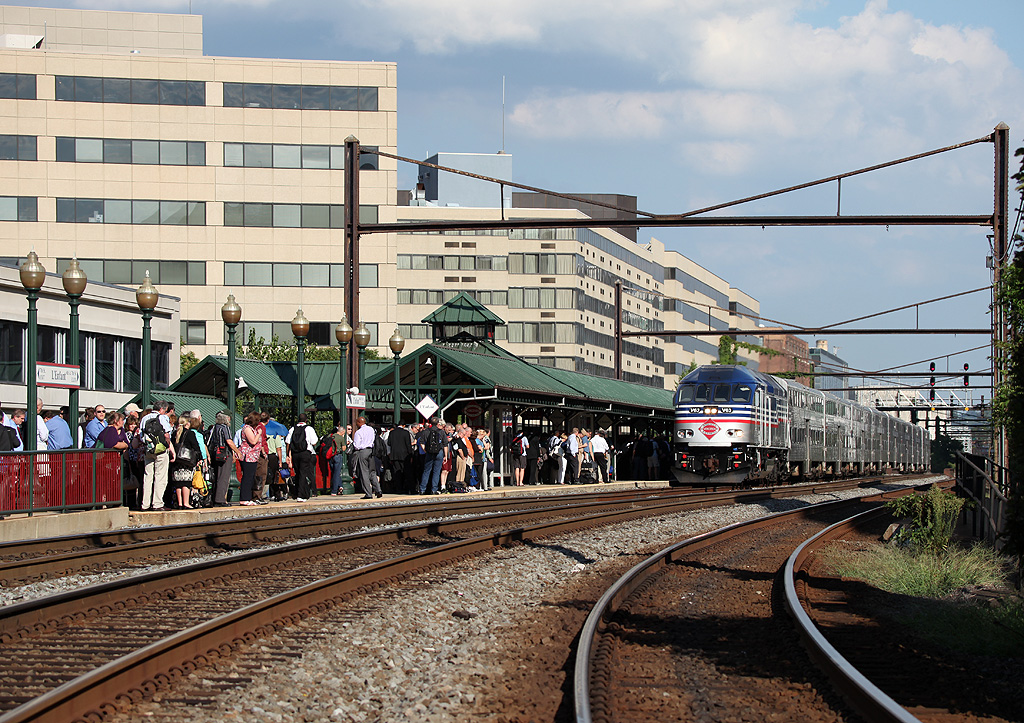
The L’Enfant commuter rail station is currently used by Virginia Railway Express (VRE) and Amtrak. A separate branch of CSX railway connects the L'Enfant station to Washington’s Union Station from the south.

MARC currently serves Union Station via three other routes from the north, including its most popular Penn Line service via Baltimore and New Carrollton, on Amtrak's Northeast Corridor. But that existing service is already oversaturated and would not be able to accommodate the masses of additional OR/BL/SV line Metrorail passengers in Prince George's County that will be impacted by the SafeTrack shutdowns.

Currently, there is no MARC station or platform at Deanwood, but as the pictures below show, there are three CSX freight rail tracks directly adjacent to the northern (inbound) track of the Deanwood Metro station:

Deanwood Metro Station. Image from Google Earth.


Deanwood Metro Station Platform. Photo by author.


That segment of the CSX freight rail network, called the Landover Subdivision, is not currently used for passenger service, although it was originally the main Baltimore & Potomac Railroad passenger route between Baltimore and Washington, DC. CSX has at times been reluctant to allow passenger service on its freight lines. But in light of the impending regional transportation crisis resulting from WMATA's planned SafeTrack initiative, we should not assume that CSX would not be willing to make the necessary accommodations to allow for passenger service along the Landover Subdivision.

CSX is a good corporate citizen and has worked with District, Maryland, and federal officials to allow passenger service on its other rail lines in the region. Additionally, under federal law, Amtrak has the ability to prioritize passenger service over any freight rail line, and it could be called in to work with MTA and CSX to establish such temporary regional service in this situation if necessary.

Establishing temporary MARC service can happen quickly

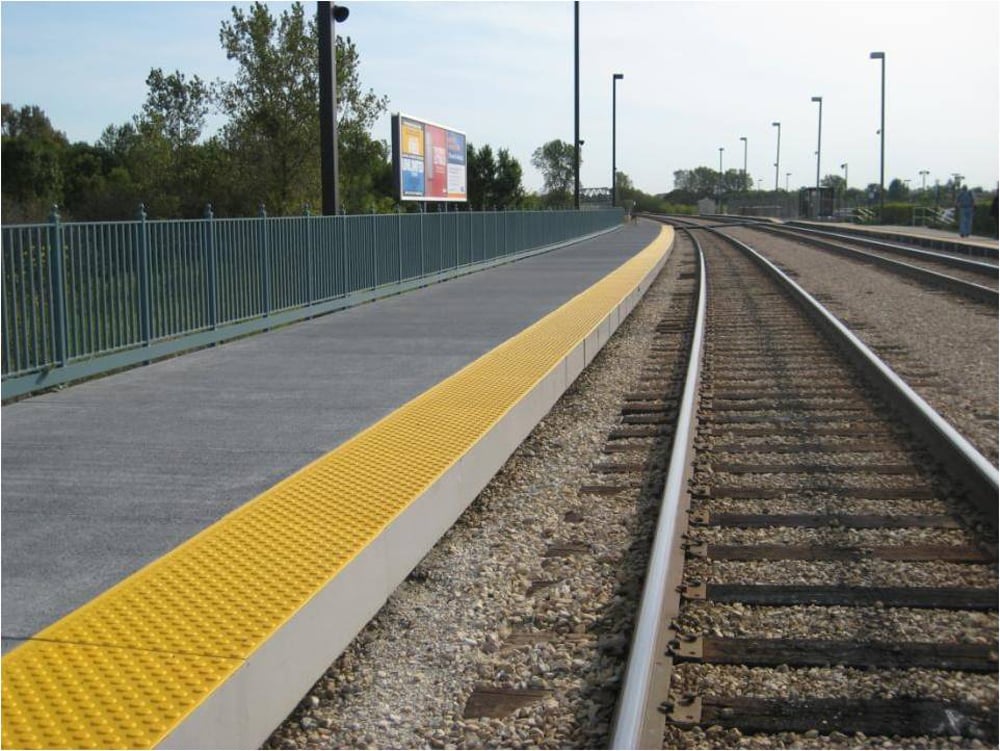
This modular platform at a Chicago Metra rail station
 was erected in three days. Photo by Composite Advantage.
Within a matter of days, MTA could quickly erect a modular platform (like this, this, or this), stairway, and ADA-compliant ramp on the northern side of the CSX tracks, at Polk St NE, which is connected to the Deanwood Metro station via an existing underpass.

Similarly, with a little additional effort, a second elevated platform with stairs and even a temporary elevator could be erected at the southern end of the CSX tracks at the L’Enfant station, along Virginia Ave SW, between 6th and 7th Streets, to provide additional capacity for passenger boarding and alighting there. (As an example, look at these great photos of a temporary elevated platform at Chicago's Pulaski Station.)

The MARC shuttle could run every 15-40 minutes between Deanwood and L’Enfant, depending on the time of day. Orange line customers could ride the Metro from New Carrollton, Landover, or Cheverly to Deanwood and then transfer to MARC. Blue and Silver line customers could ride Metro to the Addison Road station and then take a free express shuttle bus to the nearby Deanwood station.

Each of the OR/BL/SV Metro stations in Prince George's has ample commuter parking, which should be free or heavily discounted during this emergency period to encourage commuters not to drive into the District. Similarly, those commuters transferring back into the Metrorail system at Deanwood or L'Enfant from the MARC shuttle should receive a credit for the Prince George's portion of their Metro fare.

L'Enfant VRE Station. Photo by VRE.

This temporary MARC shuttle could effectively transport thousands of impacted Prince George’s OR/BL/SV line riders per day to and from downtown, and it would do so much more efficiently than 50 additional Metro buses could ever hope to do.

To encourage ridership, the cost of the MARC shuttle should be minimal (e.g., not more than $2.50 each way, and with eligibility for the $0.50 SmarTrip discount for inter-modal transfers from Metrorail or Metrobus). Conductors should use handheld on-board fare collection devices that allow for customers to pay with their SmarTrip, debit, or credit cards.

Over an extended period of repairs, such as those we will face during the SafeTrack program, this temporary MARC shuttle could provide a realistic rail alternative that would keep the region’s commuters out of their cars and committed to transit. WMATA and governmental officials owe it to the public to consider these kinds of creative options.

Monday, May 19, 2014

Prince George’s adopts “Sprawl Plan 2035” over community objections


Photo by thisisbossi on Flickr
It was supposed to be different this time. Prince George’s County’s new general plan was supposed to embrace a bold new vision for a more sustainable and transit-oriented growth strategy. Sadly, the county ultimately decided to cling to its previous failed approach of mouthing platitudes of support for walkable urban development around transit stations, while actively facilitating suburban sprawl outside of the Beltway and far away from transit.

County residents and smart growth advocates feared this eventuality when planners released the preliminary draft of Plan Prince George’s 2035, the updated countywide comprehensive plan for long-term growth and development, last fall. The draft placed too much emphasis on outer-Belway sprawl, ignored the revitalization needs of most inner-Beltway communities, and downplayed neighborhood Metro stations. At the same time, the draft plan supported massive greenfield development outside the Beltway—both at mixed-use “suburban centers” like Konterra and Westphalia, and also in scattered single-family residential subdivisions.

Each subsequent revision of the plan only made matters worse. When the Planning Board adopted its version of the plan in March, it added hundreds of acres to the exiting suburban Bowie Regional Center, which was already too disconnected from transit and well in excess of the half-mile radius that usually typifies a transit station area.

Likewise, when the County Council approved its version of the general plan earlier this month, it removed hundreds of additional acres of woodlands from the rural preservation area and placed them into the “established communities” area, making them eligible for further sprawl development. The council also added language specifically endorsing automobile-oriented suburban “town centers,” stating they “help[ed] fulfill countywide goals.”

Planners and council members repeatedly rebuffed calls for TOD fixes to plan

Ostensibly, the county's comprehensive planning process is designed to elicit meaningful public input regarding the substance of the planners’ drafts of the plan. In reality, though, the Planning Board and the County Council chose to ignore and sidestep the reforms urged by the public. They failed at nearly every turn to give fair consideration to ideas that would have helped the plan actually live up to its lofty policy pronouncements.

This pattern of public officials being dismissive of the public’s views unfortunately happens during most comprehensive planning processes in Prince George’s County—but it was supposed to be different this time.

When planners held their first town hall meeting about Plan Prince George’s last June, they appeared to be wedded to a strategy of picking 3 Metro station areas as “downtowns” and focusing most of their energies at those stations. I wondered aloud at the time whether their methodology for selecting high-performing stations was sound, whether they had a plan for how the remaining Metro, MARC, and Purple Line stations would develop over the next 20 years, and whether the planners’ continued encouragement of suburban greenfield development in “new town” centers made sense in light of what they were saying about the county’s need to focus on TOD.

Later that summer, I developed a more detailed policy paper (summarized here), setting forth various recommendations as to how planners could build upon their “3 downtowns” model by including policies and strategies that would help the county grow more smartly beyond its desired central business districts. I shared early drafts of the document with county planners and met with them to discuss it in detail.

The planners said they were surprised, but pleased, that a citizen had taken the time to develop such a comprehensive presentation. They indicated they would give serious consideration to the ideas expressed in the paper as they developed their initial draft of Plan Prince George’s. Yet, when the draft finally emerged, it did not reflect any of the policies or strategies suggested in the policy paper.

By the time the preliminary draft plan was before the Planning Board for review in March of this year, more than 100 citizens and public officials from across the county had signed a petition urging county officials to reconsider the land use priorities as expressed in the preliminary plan. Among the petition’s signatories were Maryland State Senator Joanne C. Benson, Capitol Heights Mayor Kito James, Seat Pleasant Mayor Eugene W. Grant, Forest Heights Mayor Jacqueline Goodall, and a host of civic leaders representing all 9 council districts. The Planning Board ignored these pleas and forwarded its sprawl-enhanced version of the plan to the County Council for approval on March 6.

On March 20, the petition group provided the council with a detailed set of proposed amendments to the Planning Board’s adopted version of the plan (summarized here). The Coalition for Smarter Growth also mounted an email campaign against many of the sprawl enhancements proposed by county officials.

Ultimately, the County Council turned a blind eye toward the petitioners and smart growth advocates, just as the Planning Board had. Led by council members Ingrid Turner (District 4) and Derrick Leon Davis (District 6), the council voted to approve "Sprawl Plan 2035" by a vote of 7-1. District 3 council member Eric Olson voted against the measure, and District 8 council member Obie Patterson was not present for the vote.

With that vote, the council once again sided with the well-financed developers who have fought hard to maintain the build-anywhere-you-want culture that has left Prince George's County with the least-developed and least-profitable Metro station areas in the region.

Future master plans and a better council could help undo the damage

In the end, Plan Prince George’s 2035 embodies the very same business-as-usual, undisciplined, sprawl-centered approach to future growth and development that planners cautioned the county against. While the plan says many of the right things about how and why the county should focus on developing its transit stations and reinvigorating its older communities, it ultimately allows and encourages uncontrolled sprawl growth away from transit centers and outside of the Beltway. As such, it does not provide much of an improvement over the 2002 general plan that it replaces.

Fortunately, the county does not have to wait another decade to right this wrong. Any future master plan or small-area sector plan can amend the general plan as it relates to that specific planning area. But to realize that opportunity, the county needs council members who are serious about focusing on smart growth.

Citizens need to realize what’s at stake during local elections, like the one we’re having on June 24, and choose forward-thinking leaders who can do more than just talk the talk when it comes to TOD.

Friday, March 21, 2014

Prince George’s Lawmakers Urged to Fix General Plan

Photo by MDGovpics on Flickr
(Updated March 29, 2014)

County planners have been working over the past year to revamp Prince George’s countywide comprehensive plan for future growth, known as Plan Prince George’s 2035 (“Plan 2035”). Since they released the preliminary plan draft last September, planners have received an earful—and a filing cabinet full—of public comments from concerned county citizens, who believe the plan is too encumbered by sprawl and gives scant attention to long-ignored, yet transit-rich, inner-Beltway communities. Now that the plan is before the County Council for review, calls to remedy several identified flaws in the plan are growing even louder.

Calls Increase to Fix Plan 2035 (#FixPlan2035)

Over the past several weeks, over 100 county residents have signed a petition urging county leaders to revise the plan to focus more on smart growth, transit-oriented development, and neighborhood revitalization inside the Beltway, and to turn away from the county’s traditional path of embracing massive suburban sprawl development far away from transit.

A number of state and local public officials have lent their support to the petition effort, including State Senator Joanne C. Benson, Seat Pleasant Mayor Eugene W. Grant, Capitol Heights Mayor Kito James, and Forest Heights Mayor Jacqueline Goodall. They were joined by several county civic leaders, including Douglas Edwards and Arthur Turner of the Coalition of Central Prince George’s County Civic Associations; William Cavitt of the Indian Head Highway Area Action Council; and Mike Hethmon of the Friends of Croom. Additionally, citizens from all nine of the county’s council districts have thrown their support behind the petition.

Despite the broad range of public support for reforms, the county Planning Board turned a blind eye toward the petition, failing to acknowledge its existence and not entertaining any discussion on its merits. On March 6, the board adopted and forwarded a revised version of Plan 2035 to the County Council for consideration and possible further amendment.

On March 20, as a follow-up to the petition effort, petition organizer Bradley Heard, a Capitol Heights lawyer and smart growth advocate, filed a 15-page set of proposed amendments with the County Council, urging lawmakers to revise the plan in line with the petitioners’ requests. Broadly speaking, the proposed amendments seek to do the following:
  • Revise the county’s growth policy map so that it syncs more closely with guidance provided by the Maryland Department of Planning and incorporates the targeted growth and revitalization areas previously recognized by the county and state as Sustainable Communities, Enterprise Zones, and Targeted Areas;
  • Develop a “Strategic Investment Policy” that details how the county will prioritize its infrastructure investments to catalyze development around regional and local transit centers (including assigning a high priority to Prince George’s Plaza Metro, New Carrollton Metro, and Largo Town Center Metro, where the county wants to establish “Downtowns”);
  • Simplify and clarify the descriptions of the different types of transit centers existing in the county (e.g., “Regional,” “Local,” and “Neighborhood”) and provide growth and density targets for each; and
  • Encourage mix-used transit-oriented development at all Metro, MARC, and future light rail stations, not just the 8 stations identified as “Regional” centers, and ensure that all stations are planned and zoned for densities that are supportive of rail transit.

The council will be reviewing Plan 2035 with county planners during informal, unrecorded "work sessions" that occur during the middle of the business day. While these sessions are technically open to the public, few citizens are actually aware of or able to attend and participate in these sessions. Petition organizers have urged the council to hold evening and weekend sessions to allow for greater public participation.

Under the current schedule, the council must either act to reject or accept the plan (with or without amendments) by May 6.

How would the proposed amendments improve Plan 2035?

Here’s a quick example of how the proposed amendments would address some of the more schizophrenic and unhelpful elements of the adopted version of Plan 2035. The plan's revised Land Use section has a subheading that states, “Too Many Centers Undermine Economic Growth.” Planners base that claim on the current low projections for future transit-oriented growth that the Metropolitan Washington Council of Governments (MWCOG) has predicted for Prince George’s County, based on the county's current non-transit-oriented growth trajectory. Plan 2035 acknowledges that there is “robust regional demand for transit-accessible development”; but since MWCOG thinks so little of it will come to the county, the plan concludes that we should only plan to build out 7 of our “regional” Metro stations (Greenbelt, College Park, PG Plaza, New Carrollton, Largo, Branch Ave, and Suitland), plus National Harbor.

The other 8 Metro stations…and the 6 other MARC stations…and the 6 other future Purple Line stations…and the 4 other future Southern Maryland Transit Corridor light rail stations that aren’t part of the “regional” category are relegated to the status of “local” centers and lumped in with massive non-transit-oriented future greenfield suburban sprawl projects like Westphalia and Konterra. Housing densities at the “local” Metro, MARC, and light rail stations are capped at levels that are not conducive to support rail transit (i.e., below 30 dwelling units per acre), and employers are discouraged from locating there. Meanwhile, housing densities at the greenfield sprawl sites are allowed to reach up to 40 dwelling units per acre, and those sites are projected to have hundreds of thousands of square feet of office space.

Our proposed amendments take a different approach. We view all of our transit stations as valuable assets, not as albatrosses that “undermine economic growth.” Therefore, the amendments increase the density targets at these stations to levels that are supportive of transit and encourage appropriately scaled mixed-use development (including jobs) to come to all transit stations. They also provide that a reasonable portion of the county's annual capital improvement expenditures will directed to these stations. While all these non-“regional” stations may not develop instantaneously, there’s no need to stifle development in those locations by capping density and not investing in them.

More importantly, given that our existing and planned transit stations and our other inner-Beltway growth areas and existing suburban sites like Bowie will provide virtually unlimited growth capacity for the county for the foreseeable future, the proposed amendments eliminate the sprawl category of “Town Centers” and do not promote additional greenfield development sites away from transit.

If these are the types of changes you support, please sign the petition and also separately call or email your council member to support the proposed amendments.

--
NOTE: If the above PDF Portfolio link to the proposed amendments will not open with your version of Adobe Reader, try these separate links to the cover letter and the attachment containing the proposed amendments.

Wednesday, February 26, 2014

Residents, City Leaders Urge Prince George's County to Reconsider Land Use Priorities


Image by M-NCPPC
(Updated March 4, 2014)

More than 100 Prince George’s County residents and municipal officials have signed onto a petition urging County Council members and planning commissioners to revise the current draft of the county’s General Plan. They are advocating for increased focus on developing neighborhood transit station areas and revitalizing existing older communities inside the Beltway, rather than on pursing new suburban sprawl projects.

The General Plan is the county’s long-range comprehensive roadmap that guides future growth and development. Maryland law requires counties to update their general plans at least once a decade, following the census. The Maryland-National Capital Park and Planning Commission (M-NCPPC) published the preliminary draft of “Plan Prince George’s 2035” last fall and held an initial joint public hearing with the County Council in November. Planners have spent the past several weeks reviewing and responding to oral and written public comments received through mid-December.

The preliminary plan draft recommends that 50% of the county’s future growth over the next 20 years should go to eight “Regional Transit Centers,” including National Harbor (which currently lacks a rapid transit connection) and seven of the county’s 15 Metrorail stations. But the plan also recommends that 30-40% of the county’s future growth should go to greenfield suburban developments outside of the Beltway and away from transit, such as the planned Westphalia Town Center near Upper Marlboro. Only 15% of future growth is recommended to go to the county’s remaining 20 Metro, MARC, and future Purple Line stations.

Many citizens and public officials have expressed concern that the preliminary plan unwisely prioritizes outer-Beltway sprawl over transit-oriented development (TOD) and revitalization. Lillie Thompson-Martin, mayor of the town of Fairmount Heights, charged that the plan was “starving the older established communities” by refusing them any meaningful revitalization assistance. She urged the county to designate her town and the surrounding unincorporated communities as “Neighborhood Revitalization Areas.”

Eugene W. Grant, mayor of the nearby city of Seat Pleasant, agrees. His petition comments urged the county to reevaluate how the plan treats Metrorail-accessible communities like his, saying they had been “overlooked” for “far too long” and that they have "tremendous potential." Grant further noted that refocusing on transit-oriented development around Metro stations would “stabilize our economy, create jobs, offer opportunities for local entrepreneurship … and so much more.”

Striking a similar tone, Capitol Heights mayor Kito James stated that inner-Beltway communities are the “future economic engine for Prince George's County,” and that reinvesting in the county's transit-rich core would elevate the county to “a new level of prosperity.” James noted that Montgomery County and Northern Virginia often outpace Prince George's because they have pursued an economic and land development strategy centered on "focused inner core reinvestment." 

Rev. Douglas Edwards, president of the Coalition of Central Prince George's County Community organizations, echoed the mayors' sentiments in his petition comments. "The inner-Beltway has been ignored far too long," Edwards said, citing specifically to the county's failure to develop the Addison Road and Morgan Boulevard Metro stations on the Blue Line. Those stations and the Capitol Heights station all have a number of redevelopment opportunity areas, including vacant parcels, within easy walking distance.

Even suburban county residents support a refocusing of the plan’s development priorities inside the Beltway, close to transit. Clinton resident Mary Forsht-Tucker lamented that creating additional automobile-oriented suburban town centers, as contemplated by the preliminary plan, would further clog already-overcrowded roads and make the quality of life “unbearable” for existing residents. “Doing away with the goal of having large developments built near mass transit makes a mockery of the decades of planning that preceded this Plan 2035,” she said.

Michael Hethmon, spokesperson for the Friends of Croom in southern Prince George’s County, argued that “rural tier preservation cannot occur without inside-[Beltway] TOD as the top goal of county planning.” Another civic leader, Indian Head Highway Area Action Council president William Cavitt, remarked that suburban sprawl was "self-defeating" and put the county in a "deeper financial hole."

The petition was created by Capitol Heights resident Bradley Heard, an attorney and civic activist who runs the smart growth-oriented blog Prince George’s Urbanist. It urges county leaders to revise the General Plan to direct 25-30% of future growth to local transit, neighborhood, or campus centers; to limit outer-Beltway suburban development to 10-15% of future growth; and to designate all areas designated as a Maryland Sustainable Community, Targeted Area, or Enterprise Zone as “Neighborhood Revitalization Areas.”

The preliminary draft of Plan Prince George’s 2035 is not yet final. M-NCPPC will consider the public comments received thus far and may make additional revisions to the preliminary plan before formally adopting it and sending it on to the County Council for further hearings. The County Council, which sits as the “District Council” when it considers land use matters, may make further revisions before approving the final General Plan sometime later this spring or summer.

To view the petition, click here. For more information on the preliminary plan draft, click here.


Sunday, October 20, 2013

“Hail to the Redfins… Fight for Old P.G.!”


Photo by Keith Allison on Flickr
Let’s face it: the Washington Redskins may officially be DC’s football team, but their home stadium, FedEx Field, is in Prince George’s County, Maryland. Like any good hometown fans, we yearn for the team to be successful, as they were (finally) Sunday, with their 45-41 victory over the Chicago Bears.

But beyond the gridiron, the Skins and their owner, Dan Snyder, can make Prince George’s and the Washington region even prouder by (1) heeding the call to change the team’s offensive name, and (2) advocating for an inside-the-Beltway extension of the Purple Line to Alexandria, via FedEx Field.

Introducing the “Washington Redfins”!

Last week, Prince George’s County Executive Rushern Baker joined the increasing chorus of public figures urging the Skins to change their name. “For me, if it’s offending anyone…I think you should consider changing the name,” he said. Baker’s comments echoed those of President Obama, who earlier this month said that he too would think about changing the team’s name.

Maryland Congresswoman Donna F. Edwards, whose district includes FedEx Field, has cosponsored legislation that would ban trademark protection for any name that includes the word “redskin” or any of its derivatives. Progressive media outlets are increasingly refusing to refer to the team by their official name. Even conservative columnist Charles Krauthammer believes it’s time to let the name go—not because of political correctness, but because common decency dictates the abandonment of a name that has become “tainted, freighted with negative connotations with which you would not want to be associated.”

Over the years, we have seen no shortage of suggestions for alternate names for Washington’s football team. Krauthammer and others prefer simply shortening the name to the “Skins,” which many people commonly do already. Another proposal, recently resurrected by PETA, is to keep the name “Redskins” but change the logo to a potato:

Image by PETA.

But who wants to root for a frigging spud?! We need a mascot that connotes power and might, one that evokes fear and trepidation in opponents—something exotic, yet familiar. Ladies and gentlemen, I give you…the Washington Redfins!

As described by the New South Wales government in Australia, “Redfin are a popular sport fish…because of their fighting qualities and taste. However, they are also voracious predators of other fish and invertebrates…and can devastate native fish populations…. For these reasons, redfin are considered a serious pest and…a Class 1 noxious species in [the country].”

Image by New South Wales (Australia) government.

Talk about a fearsome little fish! Yet, they are sporty, they fight well, and they taste good. What more can we ask in a mascot? We could even keep the same fight song and tune, making only the simplest of modifications in the lyrics:
Hail to the Redfins. Hail, victory.
Pride of the Nation, [or, “Potomac war fish,”]
Fight for old D.C.!

Let’s say goodbye, once and for all, to the team’s current offensive moniker and start swimming with the mighty Redfins!

UPDATE (10/25/2013): Since posting this, The Washington Post's Eugene Robinson has joined the chorus of those urging a change in the team's name. Also, The Onion put out a stinging, epithet-charged piece attacking team owner Dan Snyder's insensitivity. And the Washington City Paper is reporting about a possible under-the-radar effort to rename the team the "Washington Bravehearts."

Making a Play for the Purple Line at FedEx Field

Another way that Prince George’s hometown football team can help itself and also be a good corporate citizen is by advocating for an inside-the-Beltway extension of the Purple Line from New Carrollton to Alexandria, via FedEx Field.

As currently planned, the Purple Line will run from Bethesda to New Carrollton, with 11 stops in Prince George’s County. However, county planners have already begun to think about possible extensions of the Purple Line that would go to National Harbor, and then across the transit-ready Wilson Bridge to Eisenhower Avenue or King Street Station in Alexandria.

The county’s 2009 Master Plan of Transportation recommended a feasibility study for an outside-the-Beltway Purple Line extension that would serve Largo Town Center, Prince George’s Community College, the proposed Westphalia Town Center development, Joint Base Andrews, Branch Avenue or Suitland Metro, and the Oxon Hill/National Harbor area.

In 2012, the county’s Transitway Systems Planning Study considered three potential alternative alignments for a Purple Line extension. One proposal (PLX1) had the line running primarily inside the Beltway. Two others (PLX2 and PLX3) proposed a largely outer-Beltway route. Interestingly, two of the proposed routes (PLX1 and PLX2) would have allowed the Purple Line to serve FedEx Field and Morgan Boulevard Metro Station on the Blue Line. Yet, the study ultimately favored the proposed outer-Beltway alignment that did not serve FedEx Field.

Earlier this summer, I proposed a fourth possible alignment for the Purple Line extension. This inner-Beltway route would serve Largo Town Center Metro, FedEx Field, Morgan Boulevard Metro, Penn/Mar Shopping Center, Branch Avenue Metro, Marlow Heights Shopping Center, and National Harbor/Oxon Hill before heading across the Wilson Bridge.

Image by Maryland Transit Administration.
It would be a tremendous demonstration of corporate leadership and responsibility if the newly-named Redfins were to advocate strongly with Prince George’s County and Maryland Transit Administration officials for a Purple Line extension to FedEx Field on an inner-Beltway alignment. Taking such a stand in favor of sustainable and transit-oriented development growth principles could be transformative for the county and beneficial to the team.

Instead of relying solely on parking revenues on game day, the Redfins owners could redevelop the vast ocean of surface parking at FedEx Field into a vibrant mixed-use community that produces income on a daily basis, and even more so on game days. Similarly, other owners of existing automobile-oriented commercial property along the proposed light rail route would be able to redevelop their aging commercial centers into more profitable, compact, and walkable urban places.

Step up to the scrimmage line, Mr. Snyder. Prince George’s County needs you in the game!